Thursday, June 04, 2020

Jim Crow Laws

Legal History of Jim Crow

Reference: https://examples.yourdictionary.com/examples-of-jim-crow-laws.html
Jim Crow laws were state and local statutes that legalized racial segregation. Enacted after the Civil War, the laws denied equal opportunity to black citizens.

Jim Crow laws started to come into effect, primarily but not exclusively in southern states, after the end of Reconstruction in 1877.

Ongoing racism and Jim Crow laws of the past are responsible for many of the health, education and housing disparities that African-Americans and other ethnic groups are dealing with today. 
The legal principle of separate but equal was established in the Supreme Court case Plessy v. Ferguson in 1895. The Court's decision was summarized by Chief Justice Henry Billings Brown, who stated that the 14th Amendment's Equal Protection Clause "could not have been intended to abolish distinctions based upon color, or to enforce social, as distinguished from political equality, or a commingling of the two races upon terms unsatisfactory to either."
That distinction of social, as opposed to strictly legal, discrimination, provided the foundation for states to keep black and white people separated, particularly in social settings and social institutions such as marriage. The convenient fiction of "separate but equal" was quickly abandoned and African Americans were treated as second-class citizens by institutions and laws that persist to this day.

Jim Crow Laws in Daily Life

These laws worked to enforce segregation amongst the races, which led to civil rights actions by individuals such as Ida B. Wells, and ultimately to the civil rights movement of the 1950s and 1960s led by people like Rosa Parks and Martin Luther King Jr..
Examples of Jim Crow laws that caused these extreme tensions in the country included the following.

Business

"The business of America is business," said President Calvin Coolidge, but in his own era and in the present, it has been the country's business to enforce racial inequality. Buying, selling and the simplest activities of daily life - symbolized most famously by the simple water fountain - were firmly segregated by Jim Crow laws.
  • Alabama: "Every employer of white or negro males shall provide for such white or negro males reasonably accessible and separate toilet facilities."
  • Alabama: "It shall be unlawful to conduct a restaurant or other place for the serving of food in the city, at which white and colored people are served in the same room, unless such white and colored persons are effectually separated by a solid partition extending from the floor upward to a distance of seven feet or higher, and unless a separate entrance from the street is provided for each compartment."
  • Georgia: "All persons licensed to conduct the business of selling beer or wine...shall serve either white people exclusively or colored people exclusively and shall not sell to two races within the same room at any time.
  • Georgia: "It shall be unlawful for any amateur white baseball team to play baseball on any vacant lot or baseball diamond within two blocks of a playground devoted to the Negro race, and it shall be unlawful for any amateur colored baseball team to play baseball in any vacant lot or baseball diamond within two blocks of any playground devoted to the white race."
  • Louisiana: "All carriers must provide equal but separate seats for white and colored. No person of one race is allowed to be in the section set aside for the other race."

Marriage

Marriage has always been a highly politicized issue. As one of the most fundamental institutions of society, when social change occurs, marriage changes with it. Examples of Jim Crow laws like the following were intended to freeze marriage into a perceived ideal where racial mixing was impossible:
  • California: "All marriages of white persons with Negroes, Mongolians, members of the Malay race, or mulattoes are illegal and void."
  • Florida: "All marriages between a white person and a negro, or between a white person and a person of negro descent to the fourth generation inclusive, are hereby forever prohibited."
  • Wyoming: "All marriages of white persons with Negroes, Mulattos, Mongolians, or Malaya hereafter contracted in the State of Wyoming are and shall be illegal and void."

Medicine

Jim Crow laws required separate hospitals for whites and African Americans. What's more, restrictions on education guaranteed a constant shortage of African American medical professionals. Many treatments were only available to white patients, and even blood transfusions were segregated by race, in spite of the fact that Charles R. Drew, one of the pioneers of American blood banks and a groundbreaking scientist in the field, was himself African American.
  • Alabama: "No person or corporation shall require any white female nurse to nurse in wards or rooms or hospitals, either public or private, where negro men are placed."
  • Georgia: "The Board of Control shall see that proper and distinct apartments are arranged for said patients [in a mental hospital], so that in no cases shall Negroes and white persons be together."
  • Georgia: "The officer in charge shall not bury, or allow to be buried, any colored persons upon ground set apart or used for the burial of white persons."

Education

No single issue since the abolition of slavery has been the subject of more race-based conflict than education. Even after the 1964 Civil Rights Act banned segregated schooling, de facto segregation was maintained, both in and out of the Jim Crow South, through redistricting, redlining and covenants of parents and school administrators to maintain the racial homogeneity of white schools.
When desegregation busing threatened to integrate student bodies, parents protested, sometimes violently. Even in 2019, many cities have acknowledged "black schools" and "white schools," and people offer the same Jim Crow-era arguments against the admission of minority students.
  • New Mexico: "Separate rooms [shall] be provided for the teaching of pupils of African descent, and [when] said rooms are provided, such pupils may not be admitted to the school rooms occupied and used by pupils of Caucasian or other descent."
  • North Carolina: "The state librarian is directed to fit up and maintain a separate place for the use of the colored people who may come to the library for the purpose of reading books or periodicals."
  • Oklahoma: "Any instructor who shall teach in any school, college or institution where members of the white and colored races are received and enrolled as pupils for instruction shall be deemed guilty of a misdemeanor, and upon conviction thereof, shall be fined."
  • Texas: The County Board of Education "shall provide schools of two kinds; those for white children and those for colored children."
From schools and hospitals to prisons and pool halls, the Jim Crow laws sought to keep white and black people separate, and to guarantee the continued subjugation of black people.

Racial Codes of Behavior

As Plessy v. Ferguson explicitly protected social, as opposed to legal, discrimination, African Americans and members of other minorities experienced systematic personal discrimination at the hands of whites. The classic instance is of a white person referring to a grown black man as "boy." The reverse also applied: African Americans were expected to show deference and submission to whites, invariably referring to them as "Mister" or "Miss."
But to describe what was expected of African Americans as a "code of behavior" is misleading. There were no rules, and so no one knew when they had broken them. It was simply a matter of whether white people chose to be offended.
In the famous case of Emmett Till, for instance, a 14-year-old African American boy was mutilated and murdered for speaking to a white woman in what his murderers considered an inappropriate fashion. What did Till say? No one knows. The white woman, Carolyn Bryant, gave, and continues to give, conflicting stories. The men who murdered Till weren't even present. It was enough that someone told them he had spoken inappropriately. That was the "code" that justified lynchings, beatings and police violence in the Jim Crow South.

Health Disparities and Racism Affect African-Americans

Diabetes Is An Epidemic 

Diabetes is one of a number of chronic conditions -- along with cancer, cardiovascular and respiratory diseases -- that is driving many of the top health issues around the world.
According to the International Diabetes Federation (IDF), there are 415 million people with diabetes (2015), with numbers expected to reach more than 642 million by 2040! 
The top countries include China, India, United States, Russia, Germany, and Brazil; with other countries such as the United Kingdom, Australia, South Africa, and Japan having high rates of diabetes occurrence.

The prevalence of diabetes in the United States is estimated to be 10.3% which is relatively high, with African-Americans and Hispanic-Americans being affected the most.
By comparison, diabetes rates are 3.6% in the United Kingdom, 9.2% in Canada, and 5.7% in Australia.
Worldwide, it is estimated that 8.5% of adults (415 million) are living with diabetes and this figure is predicted to increase to 10.4% by 2030.
China and India have the largest numbers of people with diabetes -- 109.6 million and 69.2 million respectively.

Diabetes Prevalence
Diabetes is prevalent in all races around the world. In the U.S., diabetes is prevalent especially in ethnic groups having a 50% to 75% higher probability of developing diabetes compared to Caucasians. 
  • African-Americans are 60% more likely than whites to be diagnosed with diabetes.
  • Hispanic-Americans are 70% more likely than whites to be diagnosed with diabetes. 
  • Asian-Americans are 40% more likely than whites to be diagnosed with diabetes.
  • Native-Americans are almost 3 times (~200%!) more likely than whites to be diagnosed with diabetes.
  • Native Hawaiians/Pacific Islanders are almost 2.5 times (250%!) more likely than whites to be diagnosed with diabetes.

Unfortunately, African-Americans and other ethnic groups have similar high risk profiles for other diseases, including heart disease, cancer, obesity, and high blood pressure.

Health Disparities 

African-Americans have to deal with unfair health disparities such as the lack of health insurance. In addition, African-Americans have to deal with other disparities including:
  • Healthcare
  • Medical Insurance
  • Education
  • Housing (Redlining, Gentrification)
  • Job Employment
  • Wealth Distribution
Unfortunately, many of these disparities are driven by racism in the United States. 

Systemic racism, structural racism, institutional racism, and individual racism are the primary types of racism that have kept African-Americans and other ethnic groups from achieving the American Dream.


These forms of racism drive government policies, laws, housing policies, criminal justice practices, employment practices, media beliefs, etc. -- all of which affect the lives of African-Americans in multiple ways.

Health Disparities Between Blacks and Whites Run Deep


Being a person of color in America is bad for your health. That’s the theme of a new op-ed written by David Williams, Florence Sprague Norman and Laura Smart Norman Professor of Public Health at Harvard T.H. Chan School of Public Health, and Risa Lavizzo-Mourey, president and CEO of the Robert Wood Johnson Foundation. Writing in U.S. News and World Report, Williams and Lavizzo-Mourey say that acknowledging the links between racism and poor health will be critical to closing the health equity gap.

In the U.S., health disparities between blacks and whites run deep. For example, blacks have higher rates of diabetes, hypertension, and heart disease than other groups, and black children have a 500% higher death rate from asthma compared with white children. Williams and Lavizzio-Moruey write that geography plays a large role in all of this because, “where we live determines opportunities to access high-quality education, employment, housing, fresh foods or outdoor space – all contributors to our health.”

The authors write that some cities have been successful in reducing health inequities. In Philadelphia, a focus on prioritizing physical activity in schools and improving access to fresh foods has helped childhood obesity rates fall by 6.3% in the last seven years, with the biggest drops among black and Asian children.

According to Williams and Lavizzo-Mourey there is no single solution to the societal racism and poverty that contribute to poor health, but they write that, “…we now know enough to improve the situation. Health builds from where we live, learn, work and play – and only secondarily in the doctor’s office.”

The American health care system in beset with inequalities that have a disproportionate impact on people of color and other marginalized groups. These inequalities contribute to gaps in health insurance coverage, uneven access to services, and poorer health outcomes among certain populations. African Americans bear the brunt of these health care challenges.

African Americans comprise 13.4 percent of the U.S. population.1 Over the span of several decades, namely since the Civil Rights Acts of 1964 and 1968, they have been able to make notable strides in American society. According to the Economic Policy Institute, educational attainment has greatly increased, with more than 90 percent of African Americans aged 25–29 having graduated from high school.

College graduation rates have also improved among African Americans. When it comes to income, gains have been made as well, but African Americans are still paid less than white Americans for the same jobs and lag significantly behind when it comes to accumulating wealth. And as for home ownership, just over 40 percent of African Americans own a home—a rate virtually unchanged since 1968.3

African Americans are also living longer, and the majority of them have some form of health insurance coverage. However, African Americans still experience illness and infirmity at extremely high rates and have lower life expectancy than other racial and ethnic groups. They are also one of the most economically disadvantaged demographics in this country.

Forms of Racism


Racism  occurs between individuals, on an interpersonal level, and is embedded  in organizations and institutions through their policies, procedures and  practices. In general, it may seem easier to recognize individual or  interpersonal acts of racism: a slur made, a person ignored in a social  or work setting, an act of violence. 

However, "individual" racism is not  created in a vacuum but instead emerges from a society's foundational  beliefs and "ways" of seeing/doing things, and is manifested in organizations, institutions, and systems (including education). Below are some useful definitions:

Individual Racism refers to an individual's racist assumptions, beliefs or behaviours and is "a form of racial discrimination that stems from conscious and  unconscious, personal prejudice" (Henry & Tator, 2006, p. 329).  Individual Racism is connected to/learned from broader socio-economic  histories and processes and is supported and reinforced by systemic  racism. 

Because we live in such a culture of individualism (and  with the privilege of freedom of speech), some people argue that their  statements/ideas are not racist because they are just "personal  opinion." Here, it is important to point out how individualism functions  to erase hierarchies of power, and to connect unrecognized personal  ideologies to larger racial or systemic ones. (That is, individualism can be used as a defensive reaction.) This is why it is crucial to understand systemic racism and how it operates.

Systemic Racism  includes the policies and practices entrenched in established  institutions, which result in the exclusion or promotion of designated  groups. It differs from overt discrimination in that no individual intent is necessary. (Toronto Mayor's Committee on Community and Race  Relations. Race Relations: Myths and Facts)

It manifests itself in two ways:

  • institutional  racism: racial discrimination that derives from individuals carrying  out the dictates of others who are prejudiced or of a prejudiced society
  • structural racism: inequalities rooted in the system-wide operation of a society that excludes substantial numbers of members of particular groups from significant participation in major social institutions. (Henry & Tator, 2006, p. 352)

Institutional racism – Recognizing that racism need not be individualist or intentional, institutional racism refers to institutional and cultural practices that perpetuate racial inequality.  Benefits are structured to advantage powerful groups as the expense of others.  Jim Crow laws and redlining practices are two examples of institutional racism.


Structural racism – Structural racism refers to the ways in which the joint operation of institutions (i.e., inter-institutional arrangements and interactions) produce racialized outcomes, even in the absence of racist intent.  Indicators of structural racism include power inequalities, unequal access to opportunities, and differing policy outcomes by race.  Because these effects are reinforced across multiple institutions, the root causes of structural racism are difficult to isolate.  Structural racism is cumulative, pervasive, and durable.


Some forms of systemic racism may be more explicit or easier (for some) to identify than others: 

Jim Crow Laws in the US, which were state and local statutes that legalized racial segregation. Enacted after the Civil War, the laws denied equal opportunity to black citizens.

The exclusion of African-American golfers from elite, private golf courses in the US; 

The way that "universal suffrage" did not  include Indigenous North American women (nor did Indigenous men receive the vote until 1960, unless they gave up their status/identity as  Indigenous).

Some Canadian examples of systemic racism include: 
the Indian Residential School System in Canada. 
the 1885 Head Tax, the 1923 Exclusion Act, the 1897 Female Refugee Act, passed in Ontario, which criminalized 'immoral' and 'incorrigible' acts conducted by women if they were found to be pregnant out of wedlock or drunk in public. 

Other  forms or manifestations of systemic racism may not be as readily obvious to some, usually those privileged by the system. Click here to see three more examples of systemic racism.


Thursday, March 14, 2019

Leading Causes of Death and Medical Errors

The leading diseases that cause death account for almost 75% of all deaths; and, the top 3 diseases account for over 50% of all deaths in the United States. During the past 10 years, the main culprits have remained relatively the same.
Leading Causes of Death in U.S. Bar Chart

As shown in the bar chart above, the diseases that are the leading causes of death are:
-- Heart Disease
-- Cancer
-- Stroke
-- COPD/Respiratory Diseases
-- Diabetes
Other top diseases include:
-- Influenza/Pneumonia
-- Alzheimer's
-- Kidney Disease

However, medical errors (e.g. surgeries, adverse drug reactions, prescription errors, infections, lab errors, defective medical devices, misdiagnoses, etc.) have become the Number 3 leading cause of death, accounting for at least 250,000 deaths each year!

Other studies report much higher figures, claiming the number of deaths from medical error to be as high as 440,000. The reason for the discrepancy is that physicians, funeral directors, coroners and medical examiners rarely note on death certificates the human errors and system failures involved. Yet death certificates are what the Centers for Disease Control and Prevention rely on to post statistics for deaths nationwide.
FYI: Every year, about 35 million people visit the hospital (average 4.8 days stay) in the U.S. That's about 96,000 people a day. Every year, about 2.5 million people die in the U.S. (56 million worldwide). In the U.S., that's roughly 6800 people that die each day (153,000 worldwide).
Note: Globally, the top 3 diseases are the same around the world as they are in the United States.

FYI: In addition to the increase in heart disease, cancer and diabetes, recently, autoimmune diseases have begun to skyrocket, primarily affecting women and young children.
Good News!
Although many of these disease are increasing each year, there are still strategies and activities that we can implement to prevent these diseases and, in some cases, even reverse the effects of these diseases.
The most important thing that you can do right now is to educate yourself about disease and nutrition, and learn why prescription drugs are not the answer, especially long term.
Unfortunately, most people ignore these numbers because most people don't expect this is going to happen to them (to die in the hospital or after surgery due to a medical error) -- until it does ... but, then, it's too late ... 
So, be proactive and begin to educate yourself and gradually change your diet over time. If you don't like the idea of changing your diet all at once, then, keep some of your favorite foods or comfort foods as part of your diet and make just small changes over time.

By taking it slow, you'll have a better chance of sticking with the diet. Also, the really nice thing about this kind of proactive strategy is that if you should develop one of these diseases, then, it will take you a lot less time to implement the complete diet and go "all in".

In addition, it is key that you learn how to protect yourself from medical errors if you should ever end up in the hospital.  Almost 68% of the deaths due to medical errors can be prevented if the hospitals/doctors implement some improved processes and procedures; and, if the public is more aware and takes the necessary precautionary actions.

Here are some things that you can do to protect yourself:

Finding the right doctor – Even though poorly trained doctors are not a direct cause of faulty medical treatment, knowing how to choose the right doctor is still paramount to receiving an efficient, safe and tested treatment. You should never choose to go to a physician with more bad reviews than good ones and should always verify his or her reputation from multiple sources.

Checking in the most adequate hospital – Secondly, checking the hospital you wish to get treatment or surgery in is mandatory. There are plenty of sites that rate hospitals based on mortality rate, success in treating certain types of diseases, specialized equipments, safety score. You can’t foresee all the issues that may appear, but being prepared and informed before choosing the hospital will take you a long way in receiving the treatment you need.

Choosing the right insurance – Last but not least, your medical insurance should cover the adequate treatment for your condition. If, for example, your doctor recommends a certain type of surgery that is not covered by your insurance, you should not bend your treatment to fit the insurance’s limitations, but rather try to expand it as to cover the recommended treatment. If not, try as much as possible to contract another insurance that is going to support the treatment you need.

The Top 10 Medical Errors that Can Kill You

The 10 most common errors that can occur during your hospital stay include the following:
#1. Misdiagnosis. The most common type of medical error is error in diagnosis. This is not surprising, since the right diagnosis is the key to your entire medical error. A wrong diagnosis can result in delay in treatment, sometimes with deadly consequences. Not receiving a diagnosis can be dangerous too; this is why it’s so important to aim to figure out what you have, not just a list of things that you don’t have.
#2. Unnecessary treatment. Patient advocate Patty Skolnik founded Citizens for Patient Safety after her then-healthy, 22-year old son underwent brain surgery that left him partially paralyzed and unable to speak. He fought for his life for two years before succumbing to multiple infections. His story is incredibly tragic—especially since his surgery was never needed in the first place. Like Michael, thousands of people receive unnecessary treatment that cost them their lives.
#3. Unnecessary tests and deadly procedures. Studies show that $700 billion is spent every year on unnecessary tests and treatments. Not only is this costly, it can also be deadly. CT scans increase your lifetime risk of cancer, and dyes from CTs and MRIs can cause kidney failure. Even a simple blood draw can result in infection. This is not to say that you should never have a test done; only to be aware that there are risks involved, and to always ask why a test or procedure is needed.
#4. Medication mistakes. Over 60% of hospitalized patients miss their regular medication while they are in the hospital. On average, 6.8 medications are left out per patient. Wrong medications are given to patients; a 2006 Institute of Medicine report estimated that medication error injure 1.5 million Americans every year at a cost of $3.5 billion.
#5. “Never events”. Virtually everyone has heard the story of operating on wrong limb or the wrong patient. There are more horror stories. Food meant to go into stomach tubes go into chest tubes, resulting in severe infections. Air bubbles go into IV catheters, resulting in strokes. Sponges, wipes, and even scissors are left in people’s bodies after surgery. These are all “never events”, meaning that they should never happen, but they do, often with deadly consequences.
#6. Uncoordinated care. In our changing healthcare system, the idea of having “your” doctor is becoming a relic of the past. If you’re going to the hospital, chances that you won’t be taken care of by your regular doctor, but by the doctor on call. You’ll probably see several specialists, who scribble notes in charts but rarely coordinate with each other. You may end up with two of the same tests, or medications that interfere with each other. There could be lack of coordination between your doctor and your nurse, which can also results in confusion and medical error.
#7. Infections, from the hospital to you. According to the Centers for Disease Control, hospital-acquired infections affect 1.7 million people every year. These include pneumonia, infections around the site of surgery, urinary infections from catheters, and bloodstream infections from IVs. Such infections often involve bacteria that are resistant to many antibiotics, and can be deadly (the CDC estimates nearly 100,000 deaths due to them every year), especially to those with weakened immune systems.
#8. Not-so-accidental “accidents”. Every year, 500,000 patients fall while in the hospital. As many “accidents” occur due to malfunctioning medical devices. Defibrillators don’t shock; hip implants stop working; pacemaker wires break. There are supposed to be safeguards to prevent these problems from happening, but even if they happen for 1 in 100 people, do you want to be that one person who experiences the “accident”?
#9. Missed warning signs. When patients get worse, there is usually a period of minutes to hours where there are warning signs. You may feel worse, and there are often changes in your heart rate, blood pressure, and other measurements. Unfortunately, these warning signs are frequently missed, so that by the time they are finally noticed, there could have been irreversible damage. 
#10. Going home—not so fast. Studies show that 1 in 5 Medicare patients return to the hospital within 30 days of discharge from the hospital. This could be due to patients being discharged before they are ready, without understanding their discharge information, without adequate follow-up, or if there are complications with their care. The transition from hospital to home is one of the most vulnerable times, and miscommunication and misunderstanding can kill you after you get home from the hospital too.
Hospitals recognize these medical errors as a significant problem, and they are taking steps to make care safer. But if you or your loved one needs medical care now, what you can do to ensure that your hospital doesn’t kill you? 

How to Prevent Medical Errors from Killing You or a Loved One

Unfortunately, more and more people are dying from non-life-threatening problems such as weight loss surgery, knee surgery, hip-replacement surgery, post op care, adverse drug reactions, prescription errors, infections, lab errors, defective medical devices, misdiagnoses, etc.

How to Prevent Errors in the Hospital
  • If you can, choose a hospital at which many patients have the procedure or surgery you need. Research shows that patients tend to have better results when they are treated in hospitals that have a lot of practice with their condition.
  • Make sure all health care workers who have direct contact with you wash their hands. Hand washing is an important way to prevent the spread of infections.
  • Before surgery, make sure that you, your doctor, and your surgeon all agree and are clear on exactly what will be done. This can prevent errors and confusion during and after surgery. For example, surgery at the wrong site, such as left knee instead of right knee, is rare. But even once is too often. The good news is that wrong-site surgery is 100 percent preventable. The American Academy of Orthopedic Surgeons urges surgeons to sign their initials directly on the site to operate on before the surgery.
  • When you get discharged from the hospital, ask your doctor to explain the treatment plan you will use at home. This includes learning about your medicines and knowing when you can return to normal life. Research shows that at discharge time, doctors think their patients understand more than they really do.
Take charge of your health care.
  • Speak up if you have questions or concerns. You have a right to question anyone who is involved with your care.
  • Make sure that someone, such as your primary doctor, is in charge of your care. This is especially important if you have several, ongoing health problems.
  • Ask a family member or friend to support your health. They can help keep track of things and speak up for you if you can’t. Even if you think you don’t need help now, you might need it later.
Learn more about your conditions, tests, and treatments.
  • Gather as much information as you can from your doctor. In some cases, you may want to get a second opinion. You can do research on your own as well to make sure you understand your problems and options.
  • Know that “more” is not always better. Find out why you need a test or treatment and how it can help you. You could be better off without it.
  • If you have a test, don’t assume that no news is good news. Follow up to get the results.
  • Ask your doctor if your treatment is based on the latest evidence. Treatment recommendations are available from the National Guidelines Clearinghouse. You also can ask your doctor about new trials or studies.
FYI: A study by the Massachusetts College of Pharmacy and Allied Health Sciences found that 88% of medical errors involve the wrong drug or the wrong dose. This is one more reason why you should be a part of your health care. For prescriptions, know what medicine and dose you take. Check this when you pick up refills at the pharmacy. In the hospital, have in writing the medicine and dose you need. Keep track of this each time the doctor or nurse gives you drugs.

Next Steps to Wellness

If you're ready to begin reversing your diabetes naturally, then, get the ex-diabetic engineer's book Death to Diabetes.
If you're a health coach, then, also, get the Health Coaching bookScience of Diabetes book and/or the Health Coaching Program.

What Hospitals Can Do to Reduce Medical Errors and Deaths

There are many things that hospitals, doctors and pharmacies can do to help reduce medical errors and unnecessary deaths.
Simplify the process; reduce hand-offs
Many errors come from simple slips in transfers of materials, information, people, instructions or supplies. Therefore, anything that can simplify processes that are easier for people to understand and errors are easier to recognized will help reduce errors.
Standardize
If a task is done the same way ever time – by everyone – there is less chance for error.
Reduce reliance on memoryDespite its incredible potential, human memory can fail us. As a result, any system that can help reduce errors caused by memory overload is a welcome addition to any system.
Improve information access
Good decisions require good information. Thus, people must have ready access to relevant and complete information or faulty decisions can and will occur.
Use constraints and forcing functions
The prompt after hitting the delete key — “Are you sure” —  is an example of a constraint that makes it more difficult to commit errors. Meanwhile, forcing functions, which are a “form of physical constraint in which the actions are constrained so that failure at one stage prevents the next step from happening” is another way to prevent errors.
Design for errors
Design systems that encourage error detection and correction before an accident occurs are invaluable to hospitals. Independent double checks are also a way to add a fresh perspective by having one practitioner cross-check the work of another. Research has shown that people find approximately 95% of mistakes when check the work of others.
Adjust work schedules
Practices such as failing to provide a sufficient number of staff members for the job (increasing workload) and frequently altering work shifts of employees (increasing fatigue) may ultimately lead to errors in human performance. Researchers, for example, found that nurses who work overtime were three times as likely to make an error if they worked shifts lasting 12.5 hours or more.
Adjust the environment
Human factors engineers have long recognized the error-producing factors in work environments, such as noise, poor lighting, heat, and clutter. Anything that can improve a working environment will help reduce errors.
Improve communication
To reduce mistakes, avoid indirect communication among the work team and cut down on the number of communications per task. For example, when discussing patients with same name or last name, a nurse and physician may be talking about care for two different people. Anything that mitigates that scenario, such patient assignment automation, will reduce potentially life-threatening errors.
Decrease reliance on vigilance
Relying on caregiver vigilance as the primary strategy for preventing mishaps is problematic. For example, when people are expected to devote too much of their attention to a problem or situation, they are apt to devote too much of their attention to a problem or situation, they are apt to become forgetful or complacent in their vigilance.
Provide adequate safety training
If faced with an unsafe situation, staff members need to know what steps they need to take and they must be given the power to act. For example, staff at Virginia Mason Medical Center are taught to “stop the line” and make an immediate report to a patient safety specialist when faced with a situation like to cause patient harm.
Choose the right staff for the jobFor any job or task, it is important to identify people the abilities necessary to perform the job safely. Staff members should be adequately trained in the competencies that are necessary for their job and have both the skill and knowledge to recognize a potentially medical error.
Engage patients and family members
Training patients to be more assertive and involved in the medical encounter has shown to be effective in increasing patient involvement in their own care and producing better health outcomes. Patients can be one more safeguard against untoward events by paying attention to the care being provided to them.

Medical errors are a fixable problem in healthcare, but to do so requires a dedication and commitment towards finding workable, viable solutions. Looking at medical errors from a systems perspective is a good first step.

Friday, December 21, 2018

Cellular Respiration

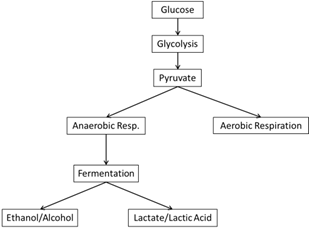
Cell respiration is the process by which cells get their energy in the form of ATP. There are two types of cellular respiration, aerobic and anaerobic. Aerobic respiration is more efficient and can be utilized in the presence of oxygen, while anaerobic respiration does not require oxygen. 
Here is a high level overview of cell respiration:  

Cell Respiration
Many organisms (or cells) will use aerobic respiration primarily, however, if there is a limited oxygen supply they can utilize anaerobic respiration for survival. Although there are some organisms (or cells) that always require anaerobic respiration and others that will always require aerobic respiration. Anaerobic respiration has fewer steps, so let’s start there.

Anaerobic Respiration

The first step in both anaerobic and aerobic respiration is called glycolysis. This is the process of taking one glucose (sugar) molecule and breaking it down into pyruvate and energy (2 ATP). We will discuss this in depth during aerobic respiration.
The second step in anaerobic respiration is called fermentation. Fermentation starts with pyruvate (the end product of glycolysis). Depending on the organism, pyruvate can either be fermented into ethanol (a fancy name for alcohol) or lactate (lactic acid). Fermentation releases CO2, but does not make any ATP – all ATP during anaerobic respiration is produced during glycolysis. Since glycolysis produces 2 ATP, anaerobic respiration yields 2 ATP for every molecule of glucose. Both glycolysis and fermentation take place within the cytosol/cytoplasm of a cell. In fact, the entire process of anaerobic respiration takes place in the cytosol.
Fermentation is the process by which we make wine and other types alcohol. Through an anaerobic process, yeast will break down the glucose in the grape juice and convert it into pyruvate. The pyruvate is then fermented into ethanol/alcohol. During anaerobic respiration CO2 is also released, this is why there are bubbles in wine and champagne (the release of CO2 during anaerobic respiration is also how yeast causes bread to rise). Of course, other organisms and bacteria can utilize this method of respiration as well, but yeast is the organism of choice for making wine.
Other cells and organisms will ferment pyruvate into lactate, also known as lactic acid. I’m sure you’ve all been told that your muscles hurt during and after exercise because you have an excess build of lactic acid in your muscles. This is because of anaerobic respiration. During exercise, the oxygen supply to our muscle cells is limited. When oxygen is low, our muscle cells will utilize anaerobic respiration and ferment pyruvate into lactic acid. With rest and time, our body will eliminate the lactic acid and our muscles will no longer be sore. When we aren’t exercising, our muscle cells primarily use aerobic respiration because oxygen is plentiful.
Here’s what you need to know so far:
Anaerobic Respiration cycle
Now let’s talk about aerobic respiration. This is more efficient because it makes more energy (or ATP) for every molecule of glucose. However, aerobic respiration can only be utilized in the presence of an ample oxygen supply.

Cellular Respiration Equation

In order to understand cellular respiration we first need to understand the basic chemical equation. Think about what you do when you’re tired and need more energy to stay awake. You yawn, which takes in a lot of oxygen, or O2, and you drink something with a lot of sugar, like Mountain Dew. A scientific term for sugar is glucose and the chemical formula for glucose is C6H12O6. We need O2 + C6H12O6 for energy to stay awake, just like we need O2 + C6H12O6 in order for cellular respiration to take place.
Now let’s think about what happens to the oxygen we inhale after a big yawn. It goes to our lungs to get utilized and we breathe out carbon dioxide, or CO2. Mixed with the carbon dioxide are water droplets, or H2O. That’s why our breath fogs up the glass when we exhale onto the car window.
Putting all this information together we get glucose plus sugar makes carbon dioxide, water, and energy. This is the cellular respiration equation:
C6H12O6 + 6O2 --> 6CO2 + 6H2O + ATP
glucose + oxygen --> carbon dioxide + water + energy
In this equation, 6 is the magic number. There are 6 oxygen, 6 carbon dioxide, and 6 water molecules. There are also a couple sixes in our formula for glucose. Remember the number 6 when writing this equation.
Eventually we need to recycle the CO2 and H2O so there is more glucose and oxygen for future cellular respiration and energy production. That’s where plants come in, with photosynthesis. The equation for photosynthesis is almost the exact opposite of the equation for cellular respiration:
6CO2 + 6H2O + light --> C6H12O6 + 6O2
carbon dioxide + water + light --> glucose + oxygen
We will save the discussion of photosynthesis for a future lesson.
If you understand everything up to this point, you are already 50% there.
Let's keep going...

Glycolysis

The first step in cellular respiration is glycolysis, or the breakdown of glucose. The naming of this process is actually very logical. Glycolysis literally means the breakdown of glucose. If we know that ‘glycose’ is an older term for ‘glucose’ and if we remember ‘lysis’ means to breakdown, then we can understand that glycolysis = glycose + lysis, or the breakdown of glucose.
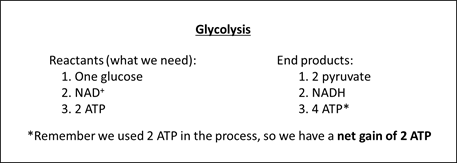
Glycolysis is the first step in cellular respiration for both anaerobic and aerobic processes. Glycolysis takes place in the cytosol of a cell. In the cytosol we convert 1 molecule of glucose into 2 molecules of pyruvate. Of course glucose can’t be converted into pyruvate without a little bit of help. This conversion requires 2 NAD+ and some energy, in the form of 2 ATP. Once glycolysis is completed, we are left with 2 pyruvate, 2 NADH, and 4 ATPs as products. Since glycolysis yields 4 ATP, but we had to use 2 ATP in the beginning of the process, the total Net Gain of energy is 2 ATP. The cell will use the 2 ATP for energy. NADH will be recycled back to NAD+ in a future process so that it can be used in glycolysis again. The 2 pyruvate molecules will be used for the second step of cellular respiration.
Glycolysis Quick Facts

Krebs Cycle/ Citric Acid Cycle/TCA cycle 

The Krebs cycle, also known as the Citric Acid cycle or the TCA (tricarboxylic acid) cycle,  regulates the oxidation of glucose. 
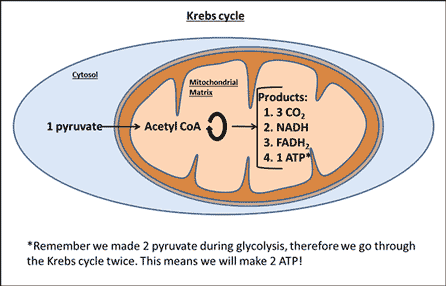
The Krebs Cycle! is the second step in aerobic respiration and takes place in the matrix of the mitochondria (middle of the mitochondria). This is a multi-step process, but don’t worry, we don’t have to memorize all of the compounds or each enzyme involved. Here, we will only focus on the key players.
We start with one of the two pyruvate molecules that were made in the cytosol of the cell during glycolysis. The pyruvate molecule enters the matrix of the mitochondria where it is converted to acetyl CoA. Acetyl CoA is responsible for initiating a cyclical series of reactions. Acetyl CoA creates the first compound in the Krebs cycle (Citrate) by enzymatically transforming the very last product formed in Krebs cycle, Oxaloacetate, into Citrate. The names of these specific compounds are not important, however, it is important to understand why it is referred to as a cycle.
Krebs Cycle
Every time through the Krebs cycle, 1 ATP molecule is created and 3 molecules of carbon dioxide, CO2, are released. Since only 1 pyruvate is needed to circle through the Krebs cycle and 2 pyruvate molecules were formed during glycolysis, the Krebs cycle is repeated. This means during cellular respiration, six carbon dioxide molecules are release and the Krebs cycle forms 2 additional ATP. Through the first two steps of cellular respiration there is a net gain of 4 ATP. Although the Krebs cycle doesn’t provide much energy, it does yield several molecules of NADH and FADH2. These two molecules will be the key to producing many more ATPs in the third step of cellular respiration, the electron transport chain.
Krebs Cycle

Electron Transport Chain / Oxidative Phosphorylation

The third and final step of cellular respiration takes place in the inner mitochondrial member and is called the electron transport chain (ETC). Remember that the mitochondria are organelles that have two phospholipid bilayer membranes. The ETC takes place within the innermost membrane. Often the term oxidative phosphorylation is used interchangeably with the electron transport chain; however, oxidative phosphorylation is the series of reaction that takes place during the ETC.
You may have noticed that we are discussing aerobic respiration and haven’t yet discussed oxygen’s role, but we know that oxygen is utilized. Oxygen comes into play during this third process. This is also the step where the most energy is made. Since this third step makes the majority of ATP and it takes place within the mitochondria, we refer to the mighty mitochondria as the ‘power house of the cell’ because it supplies most of the cell’s energy.
NADH and FADH2, which are made during the Krebs cycle, initiate the electron transport chain. Both NADH and FADH2 transport electrons down a chain of reactions. NADH or FADH2, whichever is present at the time, will work with electrons and oxygen to convert ADP to ATP. In the process NADH loses its hydrogen and creates a hydrogen concentration gradient across the inner mitochondria membrane. This hydrogen concentration gradient drives the production of more ATP. Since NADH lost its hydrogen, it is now NAD+. Do you remember why this is important? This process recycles NADH to NAD+ so that NAD+ can be reused in glycolysis.
At the end of the ETC, water (H2O) and ATP is made. Depending on how many NADH molecules are available, the electron transport chain makes a total of 32 or 34 ATP. These 32-34 ATP combined with 2 ATP from glycolysis and 2 ATP from the Krebs cycle means that one molecule of glucose (sugar) can make a total of 36-38 ATP.
Electron Transport Chain

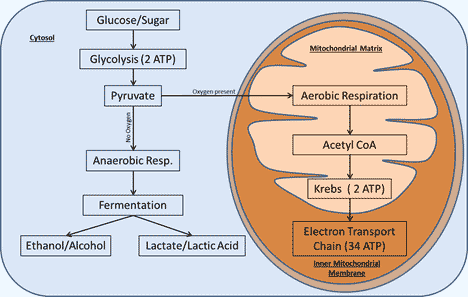
Summary of Cellular Respiration

Cellular respiration can be an anaerobic or aerobic respiration, depending on whether or not oxygen is present. Anaerobic respiration makes a total of 2 ATP. Aerobic respiration is much more efficient and can produce up to 38 ATP with a single molecule of glucose.
Anaerobic respiration consists of two steps.
               1. Glycolysis (2 ATP)
               2. Fermentation
               Total = 2 ATP
Aerobic respiration consists of three steps.
               1. Glycolysis (2 ATP)
               2. Krebs Cycle (2 ATP)
               3. Electron Transport Chain (34 ATP)
               Total = 38 ATP
Cellular Respiration Cycle
Aerobic cellular respiration can be summarized by the equation:
C6H12O6 + 6O2 --> 6CO2 + 6H2O + ATP