Friday, December 21, 2018

Glucose Metabolism

Carbohydrates are organic molecules composed of carbon, hydrogen, and oxygen atoms. The family of carbohydrates includes both simple and complex sugars. Glucose and fructose are examples of simple sugars, and starch, glycogen, and cellulose are all examples of complex sugars. 
The complex sugars are also called polysaccharides and are made of multiple monosaccharide molecules. Polysaccharides serve as energy storage (e.g., starch and glycogen) and as structural components (e.g., chitin in insects and cellulose in plants).
During digestion, carbohydrates are broken down into simple, soluble sugars that can be transported across the intestinal wall into the circulatory system to be transported throughout the body. 
Carbohydrate digestion begins in the mouth with the action of salivary amylase on starches and ends with monosaccharides being absorbed across the epithelium of the small intestine. 
Once the absorbed monosaccharides are transported to the tissues, the process of cellular respiration begins (Figure 1). 
This section will focus first on glycolysis, a process where the monosaccharide glucose is oxidized, releasing the energy stored in its bonds to produce ATP.
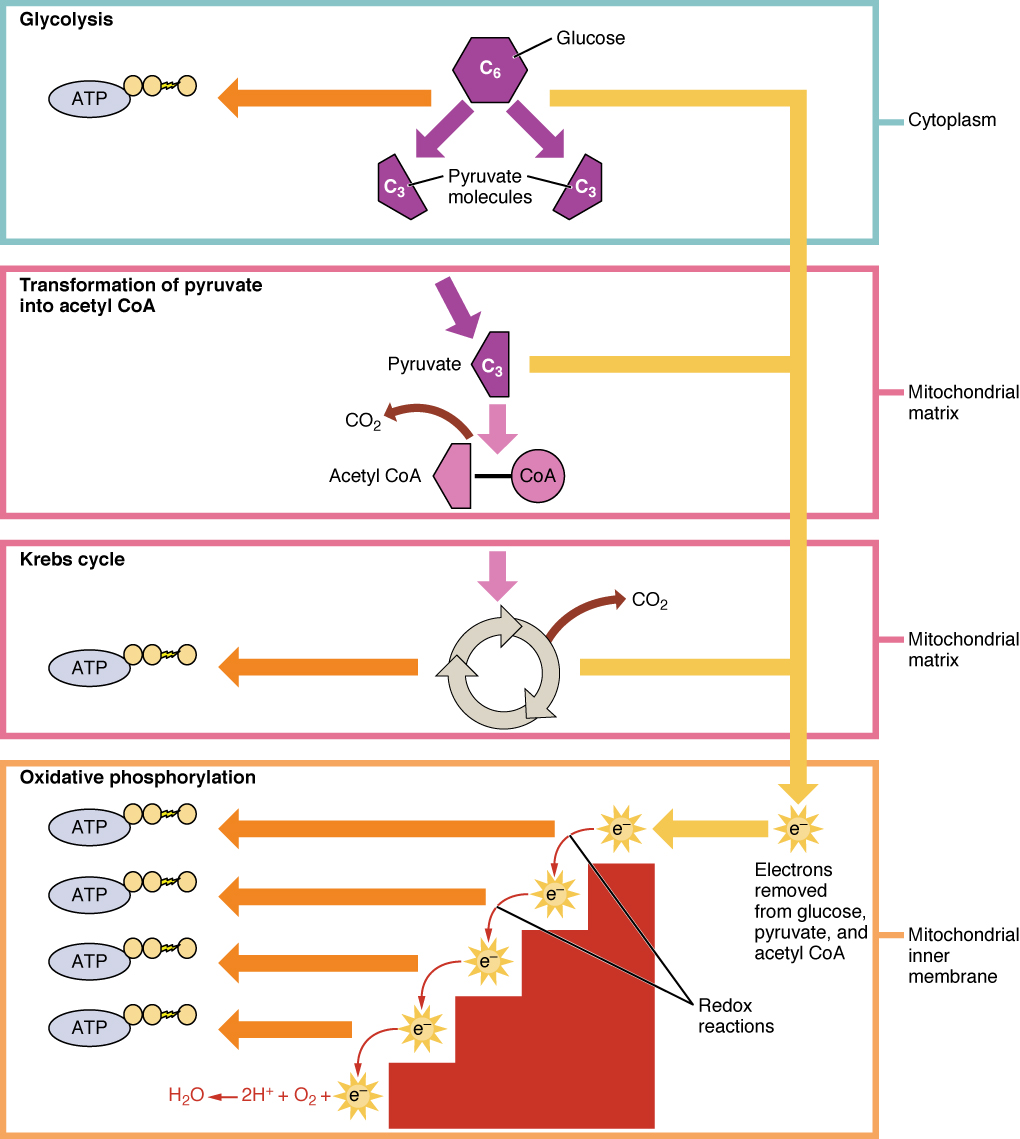
This figure shows the different pathways of cellular respiration. The pathways shown are glycolysis, the pyruvic acid cycle, the Krebs cycle, and oxidative phosphorylation.
Figure 1. Cellular Respiration. Cellular respiration oxidizes glucose molecules through glycolysis, the Krebs cycle, and oxidative phosphorylation to produce ATP.

Glycolysis

Glucose is the body’s most readily available source of energy. After digestive processes break polysaccharides down into monosaccharides, including glucose, the monosaccharides are transported across the wall of the small intestine and into the circulatory system, which transports them to the liver. In the liver, hepatocytes either pass the glucose on through the circulatory system or store excess glucose as glycogen. Cells in the body take up the circulating glucose in response to insulin and, through a series of reactions called glycolysis, transfer some of the energy in glucose to ADP to form ATP (Figure 2). The last step in glycolysis produces the product pyruvate.
Glycolysis begins with the phosphorylation of glucose by hexokinase to form glucose-6-phosphate. This step uses one ATP, which is the donor of the phosphate group. Under the action of phosphofructokinase, glucose-6-phosphate is converted into fructose-6-phosphate. At this point, a second ATP donates its phosphate group, forming fructose-1,6-bisphosphate. This six-carbon sugar is split to form two phosphorylated three-carbon molecules, glyceraldehyde-3-phosphate and dihydroxyacetone phosphate, which are both converted into glyceraldehyde-3-phosphate. The glyceraldehyde-3-phosphate is further phosphorylated with groups donated by dihydrogen phosphate present in the cell to form the three-carbon molecule 1,3-bisphosphoglycerate. The energy of this reaction comes from the oxidation of (removal of electrons from) glyceraldehyde-3-phosphate. In a series of reactions leading to pyruvate, the two phosphate groups are then transferred to two ADPs to form two ATPs. Thus, glycolysis uses two ATPs but generates four ATPs, yielding a net gain of two ATPs and two molecules of pyruvate. In the presence of oxygen, pyruvate continues on to the Krebs cycle (also called the citric acid cycle or tricarboxylic acid cycle (TCA), where additional energy is extracted and passed on.
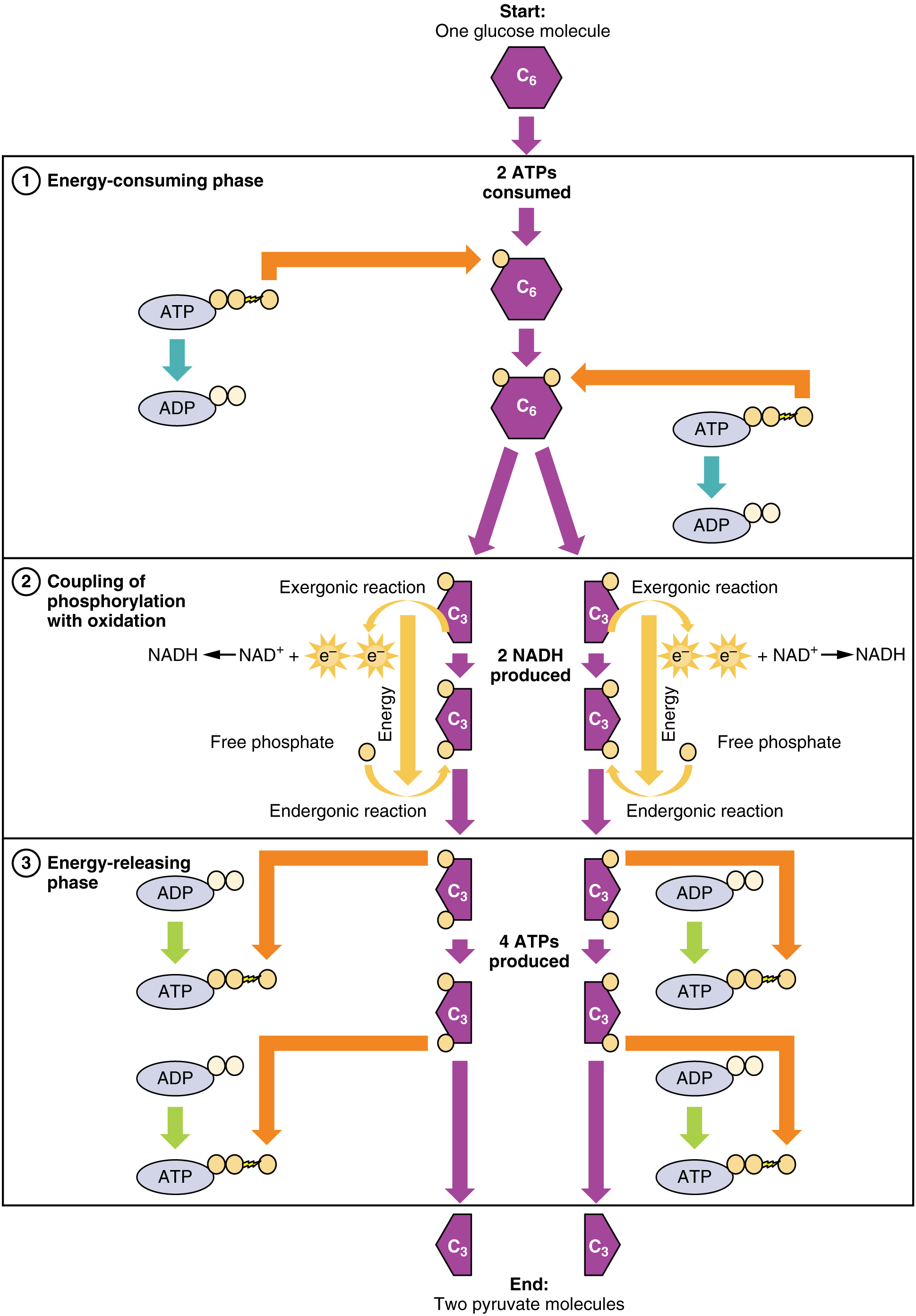
This flowchart shows the different steps in glycolysis in detail. The top panel shows the energy-consuming phase, the middle panel shows the coupling of phosphorylation with oxidation, and the bottom panel shows the energy-releasing phase.
Figure 2. Glycolysis Overview. During the energy-consuming phase of glycolysis, two ATPs are consumed, transferring two phosphates to the glucose molecule. The glucose molecule then splits into two three-carbon compounds, each containing a phosphate. During the second phase, an additional phosphate is added to each of the three-carbon compounds. The energy for this endergonic reaction is provided by the removal (oxidation) of two electrons from each three-carbon compound. During the energy-releasing phase, the phosphates are removed from both three-carbon compounds and used to produce four ATP molecules.
QR Code representing a URL
Watch this video to learn about glycolysis.
Glycolysis can be divided into two phases: energy consuming (also called chemical priming) and energy yielding. The first phase is the energy-consuming phase, so it requires two ATP molecules to start the reaction for each molecule of glucose. However, the end of the reaction produces four ATPs, resulting in a net gain of two ATP energy molecules.
Glycolysis can be expressed as the following equation:
Glucose + 2ATP + 2NAD+ + 4ADP + 2Pi → 2 Pyruvate + 4ATP + 2NADH + 2H+
This equation states that glucose, in combination with ATP (the energy source), NAD+ (a coenzyme that serves as an electron acceptor), and inorganic phosphate, breaks down into two pyruvate molecules, generating four ATP molecules—for a net yield of two ATP—and two energy-containing NADH coenzymes. The NADH that is produced in this process will be used later to produce ATP in the mitochondria. Importantly, by the end of this process, one glucose molecule generates two pyruvate molecules, two high-energy ATP molecules, and two electron-carrying NADH molecules.
The following discussions of glycolysis include the enzymes responsible for the reactions. When glucose enters a cell, the enzyme hexokinase (or glucokinase, in the liver) rapidly adds a phosphate to convert it into glucose-6-phosphate. A kinase is a type of enzyme that adds a phosphate molecule to a substrate (in this case, glucose, but it can be true of other molecules also). This conversion step requires one ATP and essentially traps the glucose in the cell, preventing it from passing back through the plasma membrane, thus allowing glycolysis to proceed. 
It also functions to maintain a concentration gradient with higher glucose levels in the blood than in the tissues. By establishing this concentration gradient, the glucose in the blood will be able to flow from an area of high concentration (the blood) into an area of low concentration (the tissues) to be either used or stored. Hexokinase is found in nearly every tissue in the body. 
Glucokinase, on the other hand, is expressed in tissues that are active when blood glucose levels are high, such as the liver. Hexokinase has a higher affinity for glucose than glucokinase and therefore is able to convert glucose at a faster rate than glucokinase. This is important when levels of glucose are very low in the body, as it allows glucose to travel preferentially to those tissues that require it more.
In the next step of the first phase of glycolysis, the enzyme glucose-6-phosphate isomerase converts glucose-6-phosphate into fructose-6-phosphate. Like glucose, fructose is also a six carbon-containing sugar. The enzyme phosphofructokinase-1 then adds one more phosphate to convert fructose-6-phosphate into fructose-1-6-bisphosphate, another six-carbon sugar, using another ATP molecule. Aldolase then breaks down this fructose-1-6-bisphosphate into two three-carbon molecules, glyceraldehyde-3-phosphate and dihydroxyacetone phosphate. The triosephosphate isomerase enzyme then converts dihydroxyacetone phosphate into a second glyceraldehyde-3-phosphate molecule. Therefore, by the end of this chemical-priming or energy-consuming phase, one glucose molecule is broken down into two glyceraldehyde-3-phosphate molecules.
The second phase of glycolysis, the energy-yielding phase, creates the energy that is the product of glycolysis. Glyceraldehyde-3-phosphate dehydrogenase converts each three-carbon glyceraldehyde-3-phosphate produced during the energy-consuming phase into 1,3-bisphosphoglycerate. This reaction releases an electron that is then picked up by NAD+ to create an NADH molecule. NADH is a high-energy molecule, like ATP, but unlike ATP, it is not used as energy currency by the cell. 
Because there are two glyceraldehyde-3-phosphate molecules, two NADH molecules are synthesized during this step. Each 1,3-bisphosphoglycerate is subsequently dephosphorylated (i.e., a phosphate is removed) by phosphoglycerate kinase into 3-phosphoglycerate. Each phosphate released in this reaction can convert one molecule of ADP into one high-energy ATP molecule, resulting in a gain of two ATP molecules.
The enzyme phosphoglycerate mutase then converts the 3-phosphoglycerate molecules into 2-phosphoglycerate. The enolase enzyme then acts upon the 2-phosphoglycerate molecules to convert them into phosphoenolpyruvate molecules. The last step of glycolysis involves the dephosphorylation of the two phosphoenolpyruvate molecules by pyruvate kinase to create two pyruvate molecules and two ATP molecules.
In summary, one glucose molecule breaks down into two pyruvate molecules, and creates two net ATP molecules and two NADH molecules by glycolysis. Therefore, glycolysis generates energy for the cell and creates pyruvate molecules that can be processed further through the aerobic Krebs cycle (also called the citric acid cycle or tricarboxylic acid cycle); converted into lactic acid or alcohol (in yeast) by fermentation; or used later for the synthesis of glucose through gluconeogenesis.

Anaerobic Respiration

When oxygen is limited or absent, pyruvate enters an anaerobic pathway. In these reactions, pyruvate can be converted into lactic acid. In addition to generating an additional ATP, this pathway serves to keep the pyruvate concentration low so glycolysis continues, and it oxidizes NADH into the NAD+ needed by glycolysis. In this reaction, lactic acid replaces oxygen as the final electron acceptor. Anaerobic respiration occurs in most cells of the body when oxygen is limited or mitochondria are absent or nonfunctional. 
For example, because erythrocytes (red blood cells) lack mitochondria, they must produce their ATP from anaerobic respiration. This is an effective pathway of ATP production for short periods of time, ranging from seconds to a few minutes. The lactic acid produced diffuses into the plasma and is carried to the liver, where it is converted back into pyruvate or glucose via the Cori cycle. 
Similarly, when a person exercises, muscles use ATP faster than oxygen can be delivered to them. They depend on glycolysis and lactic acid production for rapid ATP production.

Aerobic Respiration

In the presence of oxygen, pyruvate can enter the Krebs cycle where additional energy is extracted as electrons are transferred from the pyruvate to the receptors NAD+, GDP, and FAD, with carbon dioxide being a “waste product” (Figure 3). The NADH and FADH2 pass electrons on to the electron transport chain, which uses the transferred energy to produce ATP. As the terminal step in the electron transport chain, oxygen is the terminal electron acceptor and creates water inside the mitochondria.
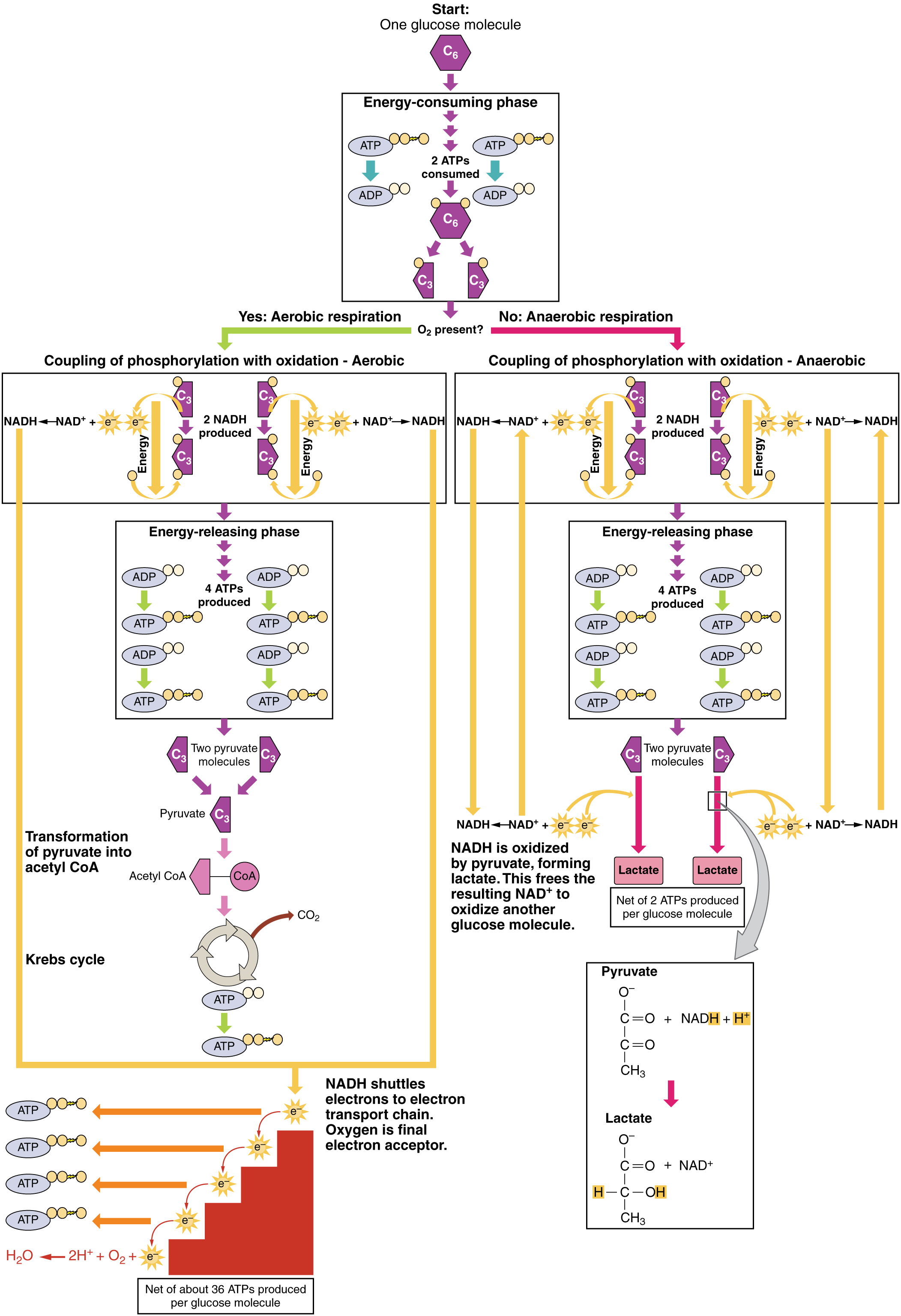
This flowchart shows the processes of anaerobic and aerobic respiration. The top image shows the energy consuming phase of glycolysis. This branches into aerobic respiration on the left and anaerobic respiration on the right.
Figure 3. Aerobic versus Anaerobic Respiration. The process of anaerobic respiration converts glucose into two lactate molecules in the absence of oxygen or within erythrocytes that lack mitochondria. During aerobic respiration, glucose is oxidized into two pyruvate molecules.

Krebs Cycle/Citric Acid Cycle/Tricarboxylic Acid Cycle

The pyruvate molecules generated during glycolysis are transported across the mitochondrial membrane into the inner mitochondrial matrix, where they are metabolized by enzymes in a pathway called the Krebs cycle (Figure 4). 
The Krebs cycle is also commonly called the citric acid cycle or the tricarboxylic acid (TCA) cycle. During the Krebs cycle, high-energy molecules, including ATP, NADH, and FADH2, are created. NADH and FADH2 then pass electrons through the electron transport chain in the mitochondria to generate more ATP molecules.
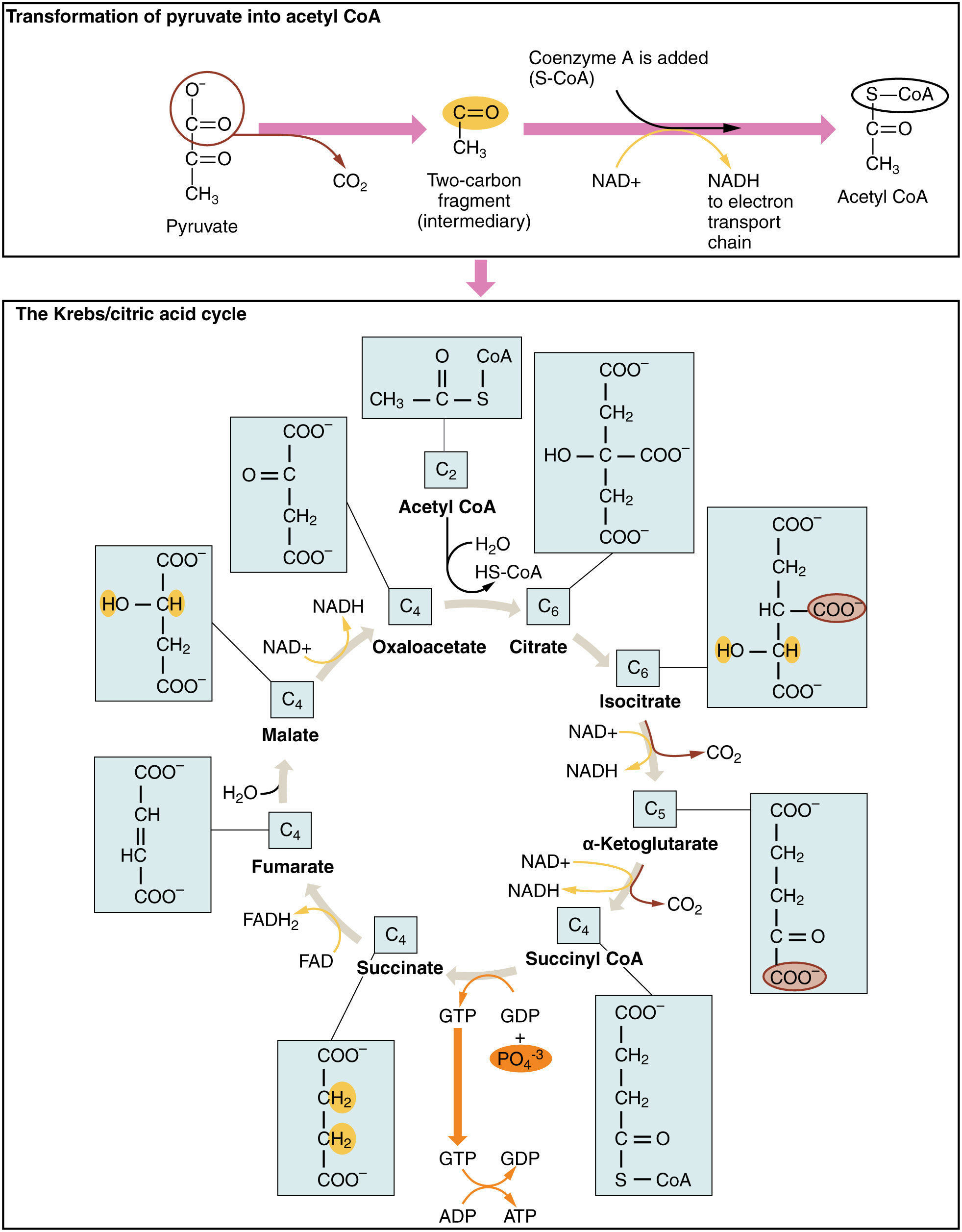
The top panel of this figure shows the transformation of pyruvate to acetyl-CoA, and the bottom panel shows the steps in Krebs cycle.
Figure 4. Krebs Cycle. During the Krebs cycle, each pyruvate that is generated by glycolysis is converted into a two-carbon acetyl CoA molecule. The acetyl CoA is systematically processed through the cycle and produces high-energy NADH, FADH2, and ATP molecules.
The three-carbon pyruvate molecule generated during glycolysis moves from the cytoplasm into the mitochondrial matrix, where it is converted by the enzyme pyruvate dehydrogenase into a two-carbon acetyl coenzyme A (acetyl CoA) molecule. This reaction is an oxidative decarboxylation reaction. 
It converts the three-carbon pyruvate into a two-carbon acetyl CoA molecule, releasing carbon dioxide and transferring two electrons that combine with NAD+ to form NADH. Acetyl CoA enters the Krebs cycle by combining with a four-carbon molecule, oxaloacetate, to form the six-carbon molecule citrate, or citric acid, at the same time releasing the coenzyme A molecule.
The six-carbon citrate molecule is systematically converted to a five-carbon molecule and then a four-carbon molecule, ending with oxaloacetate, the beginning of the cycle. Along the way, each citrate molecule will produce one ATP, one FADH2, and three NADH. The FADH2 and NADH will enter the oxidative phosphorylation system located in the inner mitochondrial membrane. In addition, the Krebs cycle supplies the starting materials to process and break down proteins and fats.
To start the Krebs cycle, citrate synthase combines acetyl CoA and oxaloacetate to form a six-carbon citrate molecule; CoA is subsequently released and can combine with another pyruvate molecule to begin the cycle again. The aconitase enzyme converts citrate into isocitrate. In two successive steps of oxidative decarboxylation, two molecules of CO2 and two NADH molecules are produced when isocitrate dehydrogenase converts isocitrate into the five-carbon α-ketoglutarate, which is then catalyzed and converted into the four-carbon succinyl CoA by α-ketoglutarate dehydrogenase. 
The enzyme succinyl CoA dehydrogenase then converts succinyl CoA into succinate and forms the high-energy molecule GTP, which transfers its energy to ADP to produce ATP. Succinate dehydrogenase then converts succinate into fumarate, forming a molecule of FADH2. Fumarase then converts fumarate into malate, which malate dehydrogenase then converts back into oxaloacetate while reducing NAD+ to NADH. Oxaloacetate is then ready to combine with the next acetyl CoA to start the Krebs cycle again (see Figure 4). For each turn of the cycle, three NADH, one ATP (through GTP), and one FADHare created. Each carbon of pyruvate is converted into CO2, which is released as a byproduct of oxidative (aerobic) respiration.

Oxidative Phosphorylation and the Electron Transport Chain

The electron transport chain (ETC) uses the NADH and FADH2 produced by the Krebs cycle to generate ATP. Electrons from NADH and FADH2 are transferred through protein complexes embedded in the inner mitochondrial membrane by a series of enzymatic reactions. The electron transport chain consists of a series of four enzyme complexes (Complex I – Complex IV) and two coenzymes (ubiquinone and Cytochrome c), which act as electron carriers and proton pumps used to transfer H+ ions into the space between the inner and outer mitochondrial membranes (Figure 5). 
The ETC couples the transfer of electrons between a donor (like NADH) and an electron acceptor (like O2) with the transfer of protons (H+ ions) across the inner mitochondrial membrane, enabling the process of oxidative phosphorylation. In the presence of oxygen, energy is passed, stepwise, through the electron carriers to collect gradually the energy needed to attach a phosphate to ADP and produce ATP. 
The role of molecular oxygen, O2, is as the terminal electron acceptor for the ETC. This means that once the electrons have passed through the entire ETC, they must be passed to another, separate molecule. These electrons, O2, and H+ ions from the matrix combine to form new water molecules. This is the basis for your need to breathe in oxygen. Without oxygen, electron flow through the ETC ceases.
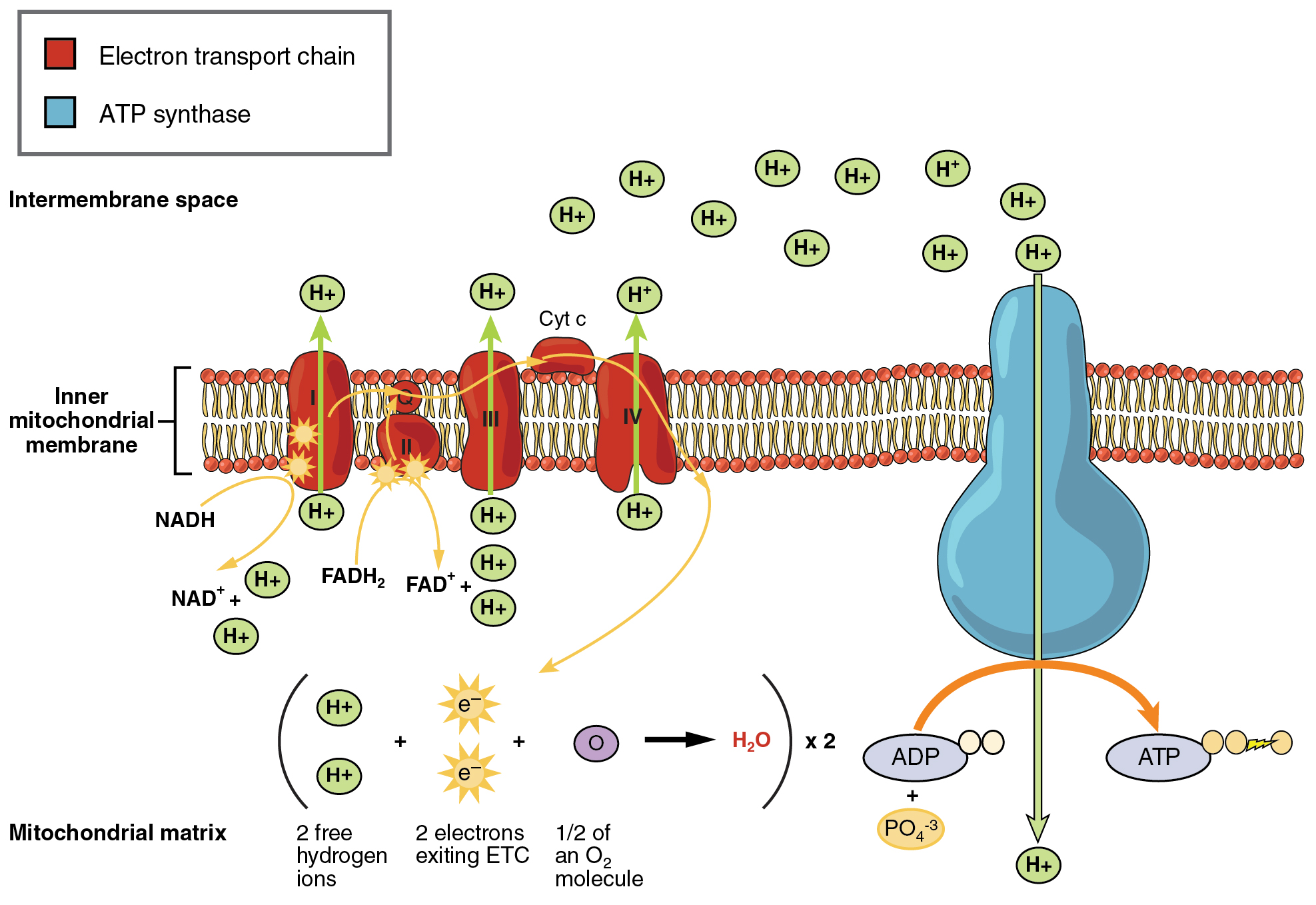
This image shows the mitochondrial membrane with proton pumps and ATP synthase embedded in the membrane. Arrows show the direction of flow of proteins and electrons across the membrane.
Figure 5. Electron Transport Chain. The electron transport chain is a series of electron carriers and ion pumps that are used to pump H+ ions out of the inner mitochondrial matrix.
The electrons released from NADH and FADH2 are passed along the chain by each of the carriers, which are reduced when they receive the electron and oxidized when passing it on to the next carrier. Each of these reactions releases a small amount of energy, which is used to pump H+ ions across the inner membrane. The accumulation of these protons in the space between the membranes creates a proton gradient with respect to the mitochondrial matrix.
Also embedded in the inner mitochondrial membrane is an amazing protein pore complex called ATP synthase. Effectively, it is a turbine that is powered by the flow of Hions across the inner membrane down a gradient and into the mitochondrial matrix. As the Hions traverse the complex, the shaft of the complex rotates. This rotation enables other portions of ATP synthase to encourage ADP and Pi to create ATP. In accounting for the total number of ATP produced per glucose molecule through aerobic respiration, it is important to remember the following points:
  • A net of two ATP are produced through glycolysis (four produced and two consumed during the energy-consuming stage). However, these two ATP are used for transporting the NADH produced during glycolysis from the cytoplasm into the mitochondria. Therefore, the net production of ATP during glycolysis is zero.
  • In all phases after glycolysis, the number of ATP, NADH, and FADH2 produced must be multiplied by two to reflect how each glucose molecule produces two pyruvate molecules.
  • In the ETC, about three ATP are produced for every oxidized NADH. However, only about two ATP are produced for every oxidized FADH2. The electrons from FADH2produce less ATP, because they start at a lower point in the ETC (Complex II) compared to the electrons from NADH (Complex I) (see Figure 5) .
Therefore, for every glucose molecule that enters aerobic respiration, a net total of 36 ATPs are produced (Figure 6).
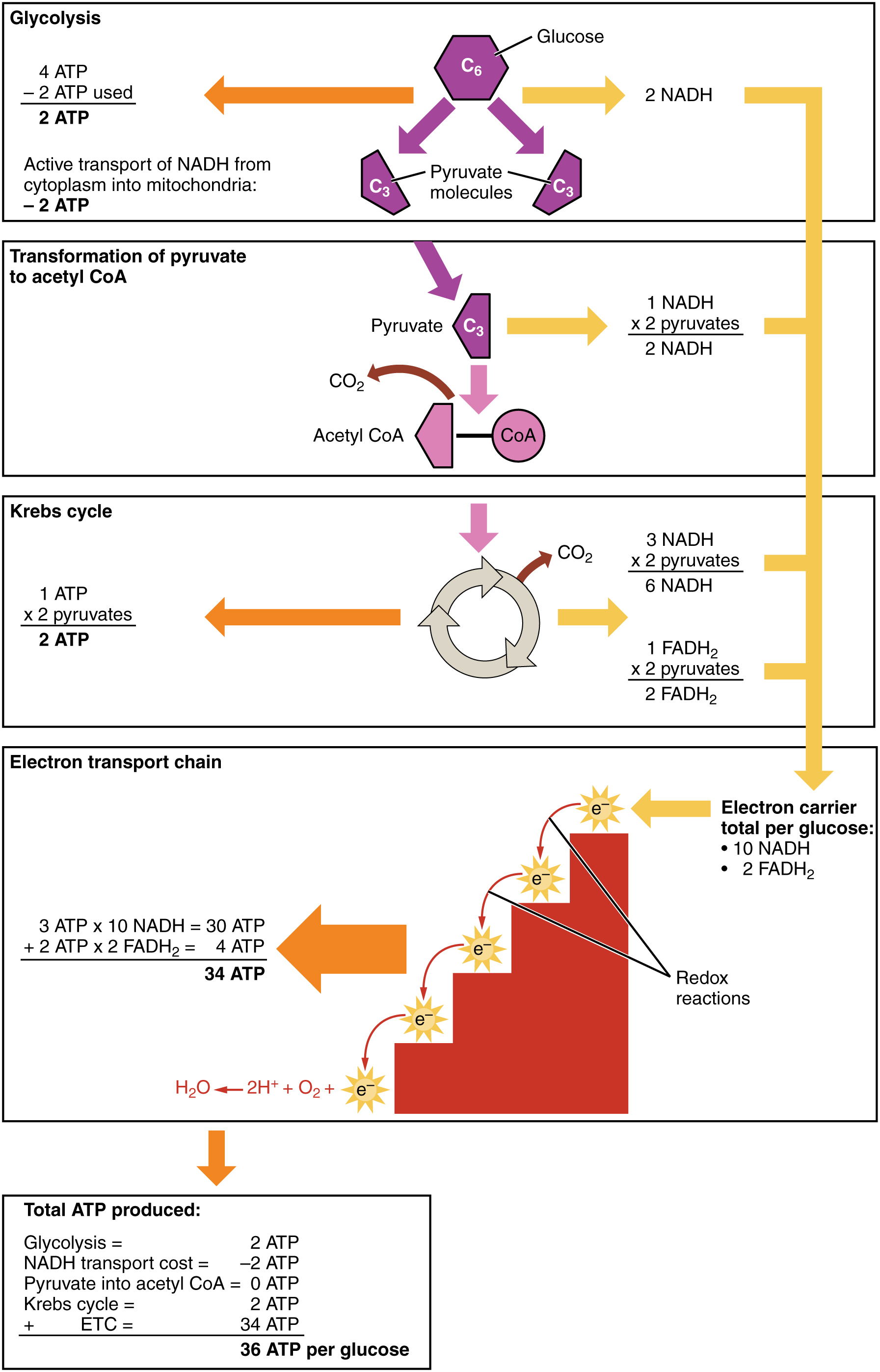
This figure shows the different steps in which carbohydrates are metabolized and lists the number of ATP molecules produced in each step. The different steps shown are glycolysis, transformation of pyruvate to acetyl-CoA, the Krebs cycle, and the electron transport chain.
Figure 6. Carbohydrate Metabolism. Carbohydrate metabolism involves glycolysis, the Krebs cycle, and the electron transport chain.

Gluconeogenesis

Gluconeogenesis is the synthesis of new glucose molecules from pyruvate, lactate, glycerol, or the amino acids alanine or glutamine. This process takes place primarily in the liver during periods of low glucose, that is, under conditions of fasting, starvation, and low carbohydrate diets. So, the question can be raised as to why the body would create something it has just spent a fair amount of effort to break down? Certain key organs, including the brain, can use only glucose as an energy source; therefore, it is essential that the body maintain a minimum blood glucose concentration. When the blood glucose concentration falls below that certain point, new glucose is synthesized by the liver to raise the blood concentration to normal.
Gluconeogenesis is not simply the reverse of glycolysis. There are some important differences (Figure 7). Pyruvate is a common starting material for gluconeogenesis. First, the pyruvate is converted into oxaloacetate. Oxaloacetate then serves as a substrate for the enzyme phosphoenolpyruvate carboxykinase (PEPCK), which transforms oxaloacetate into phosphoenolpyruvate (PEP). From this step, gluconeogenesis is nearly the reverse of glycolysis. PEP is converted back into 2-phosphoglycerate, which is converted into 3-phosphoglycerate. 
Then, 3-phosphoglycerate is converted into 1,3 bisphosphoglycerate and then into glyceraldehyde-3-phosphate. Two molecules of glyceraldehyde-3-phosphate then combine to form fructose-1-6-bisphosphate, which is converted into fructose 6-phosphate and then into glucose-6-phosphate. Finally, a series of reactions generates glucose itself. In gluconeogenesis (as compared to glycolysis), the enzyme hexokinase is replaced by glucose-6-phosphatase, and the enzyme phosphofructokinase-1 is replaced by fructose-1,6-bisphosphatase. This helps the cell to regulate glycolysis and gluconeogenesis independently of each other.
As will be discussed as part of lipolysis, fats can be broken down into glycerol, which can be phosphorylated to form dihydroxyacetone phosphate or DHAP. DHAP can either enter the glycolytic pathway or be used by the liver as a substrate for gluconeogenesis.
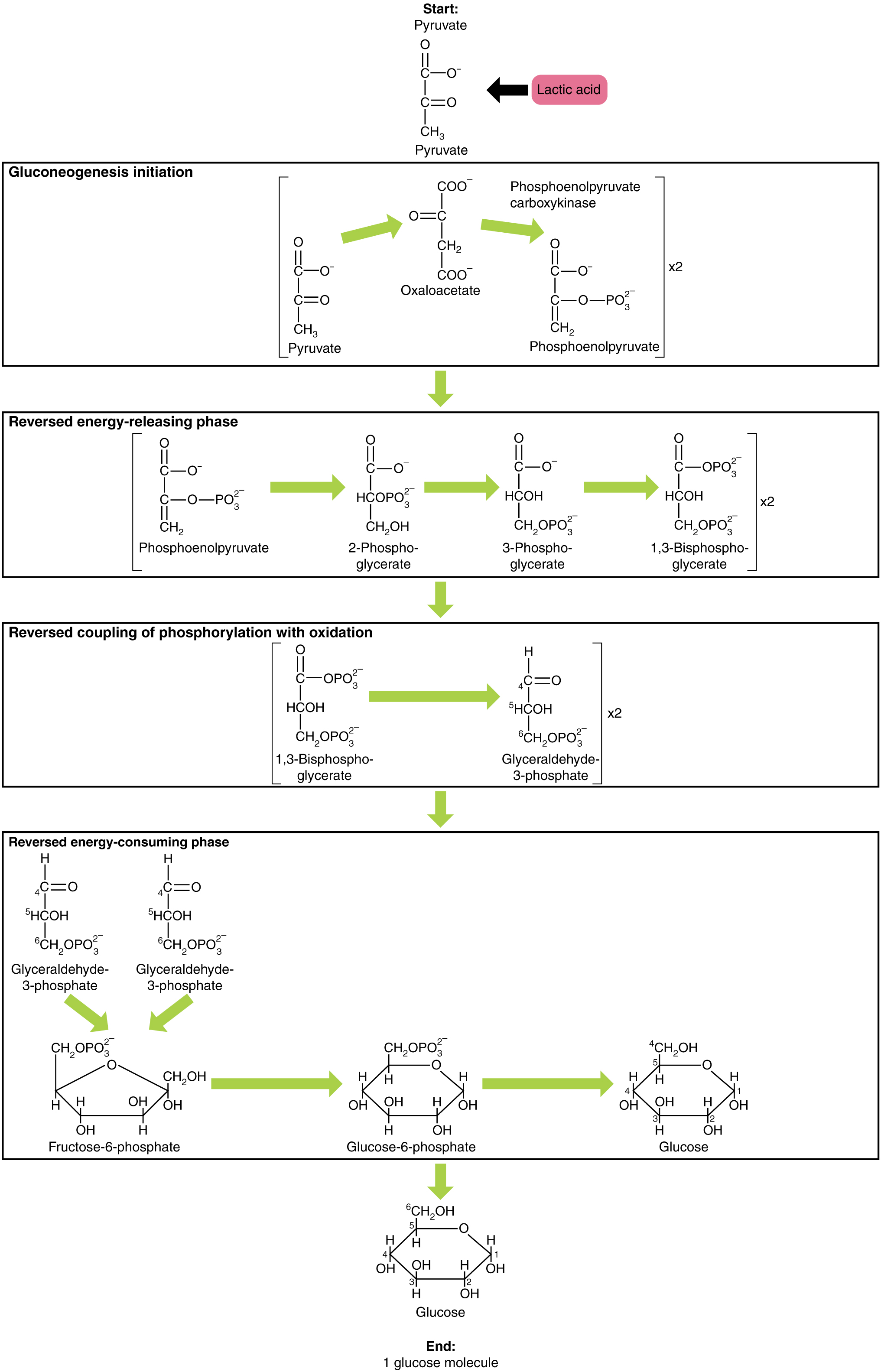
This figure shows the different steps in gluconeogenesis, where pyruvate is converted to glucose.
Figure 8. Gluconeogenesis. Gluconeogenesis is the synthesis of glucose from pyruvate, lactate, glycerol, alanine, or glutamate.
Body’s Metabolic Rate
The human body’s metabolic rate decreases nearly 2 percent per decade after age 30. Changes in body composition, including reduced lean muscle mass, are mostly responsible for this decrease. The most dramatic loss of muscle mass, and consequential decline in metabolic rate, occurs between 50 and 70 years of age. Loss of muscle mass is the equivalent of reduced strength, which tends to inhibit seniors from engaging in sufficient physical activity. This results in a positive-feedback system where the reduced physical activity leads to even more muscle loss, further reducing metabolism.
There are several things that can be done to help prevent general declines in metabolism and to fight back against the cyclic nature of these declines. These include eating breakfast, eating small meals frequently, consuming plenty of lean protein, drinking water to remain hydrated, exercising (including strength training), and getting enough sleep. These measures can help keep energy levels from dropping and curb the urge for increased calorie consumption from excessive snacking. 
While these strategies are not guaranteed to maintain metabolism, they do help prevent muscle loss and may increase energy levels. Some experts also suggest avoiding sugar, which can lead to excess fat storage. Spicy foods and green tea might also be beneficial. Because stress activates cortisol release, and cortisol slows metabolism, avoiding stress, or at least practicing relaxation techniques, can also help.

Summary

Metabolic enzymes catalyze catabolic reactions that break down carbohydrates contained in food. The energy released is used to power the cells and systems that make up your body. Excess or unutilized energy is stored as fat or glycogen for later use. Carbohydrate metabolism begins in the mouth, where the enzyme salivary amylase begins to break down complex sugars into monosaccharides. These can then be transported across the intestinal membrane into the bloodstream and then to body tissues. In the cells, glucose, a six-carbon sugar, is processed through a sequence of reactions into smaller sugars, and the energy stored inside the molecule is released. 
The first step of carbohydrate catabolism is glycolysis, which produces pyruvate, NADH, and ATP. Under anaerobic conditions, the pyruvate can be converted into lactate to keep glycolysis working. 
Under aerobic conditions, pyruvate enters the Krebs cycle, also called the citric acid cycle or tricarboxylic acid cycle. In addition to ATP, the Krebs cycle produces high-energy FADH2 and NADH molecules, which provide electrons to the oxidative phosphorylation process that generates more high-energy ATP molecules. For each molecule of glucose that is processed in glycolysis, a net of 36 ATPs can be created by aerobic respiration.
Under anaerobic conditions, ATP production is limited to those generated by glycolysis. While a total of four ATPs are produced by glycolysis, two are needed to begin glycolysis, so there is a net yield of two ATP molecules.
In conditions of low glucose, such as fasting, starvation, or low carbohydrate diets, glucose can be synthesized from lactate, pyruvate, glycerol, alanine, or glutamate. This process, called gluconeogenesis, is almost the reverse of glycolysis and serves to create glucose molecules for glucose-dependent organs, such as the brain, when glucose levels fall below normal.

Lipid Metabolism (Lipolysis)

Fats (or triglycerides) within the body are ingested as food or synthesized by adipocytes or hepatocytes from carbohydrate precursors. 
Lipid metabolism entails the oxidation of fatty acids to either generate energy or synthesize new lipids from smaller constituent molecules. Lipid metabolism is associated with carbohydrate metabolism, as products of glucose (such as acetyl CoA) can be converted into lipids.
The top image shows the chemical formula for a triglyceride, and the bottom panel shows the formula for a monoglyceride.
Figure 1. A triglyceride molecule (a) breaks down into a monoglyceride (b).
Lipid metabolism begins in the intestine where ingested triglycerides are broken down into smaller chain fatty acids and subsequently into monoglyceride molecules by pancreatic lipases, enzymes that break down fats after they are emulsified by bile salts. When food reaches the small intestine in the form of chyme, a digestive hormone called cholecystokinin (CCK) is released by intestinal cells in the intestinal mucosa. CCK stimulates the release of pancreatic lipase from the pancreas and stimulates the contraction of the gallbladder to release stored bile salts into the intestine. CCK also travels to the brain, where it can act as a hunger suppressant.
This figure shows a chylomicron containing triglycerides and cholesterol molecules as well as other lipids.
Figure 2. Chylomicrons contain triglycerides, cholesterol molecules, and other apolipoproteins (protein molecules). They function to carry these water-insoluble molecules from the intestine, through the lymphatic system, and into the bloodstream, which carries the lipids to adipose tissue for storage.
Together, the pancreatic lipases and bile salts break down triglycerides into free fatty acids. These fatty acids can be transported across the intestinal membrane. However, once they cross the membrane, they are recombined to again form triglyceride molecules. Within the intestinal cells, these triglycerides are packaged along with cholesterol molecules in phospholipid vesicles called chylomicrons. The chylomicrons enable fats and cholesterol to move within the aqueous environment of your lymphatic and circulatory systems. Chylomicrons leave the enterocytes by exocytosis and enter the lymphatic system via lacteals in the villi of the intestine. From the lymphatic system, the chylomicrons are transported to the circulatory system. Once in the circulation, they can either go to the liver or be stored in fat cells (adipocytes) that comprise adipose (fat) tissue found throughout the body.

Lipolysis

To obtain energy from fat, triglycerides must first be broken down by hydrolysis into their two principal components, fatty acids and glycerol. This process, called lipolysis, takes place in the cytoplasm. The resulting fatty acids are oxidized by β-oxidation into acetyl CoA, which is used by the Krebs cycle. The glycerol that is released from triglycerides after lipolysis directly enters the glycolysis pathway as DHAP. Because one triglyceride molecule yields three fatty acid molecules with as much as 16 or more carbons in each one, fat molecules yield more energy than carbohydrates and are an important source of energy for the human body. Triglycerides yield more than twice the energy per unit mass when compared to carbohydrates and proteins. Therefore, when glucose levels are low, triglycerides can be converted into acetyl CoA molecules and used to generate ATP through aerobic respiration.
The breakdown of fatty acids, called fatty acid oxidation or beta (β)-oxidation, begins in the cytoplasm, where fatty acids are converted into fatty acyl CoA molecules. This fatty acyl CoA combines with carnitine to create a fatty acyl carnitine molecule, which helps to transport the fatty acid across the mitochondrial membrane. Once inside the mitochondrial matrix, the fatty acyl carnitine molecule is converted back into fatty acyl CoA and then into acetyl CoA. The newly formed acetyl CoA enters the Krebs cycle and is used to produce ATP in the same way as acetyl CoA derived from pyruvate.
This figure shows the reactions that break down fatty acids. The top panel shows the conversion of fatty acids into carnitine. The bottom panel shows the conversion of carnitine into acetyl-CoA.
Figure 3. During fatty acid oxidation, triglycerides can be broken down into acetyl CoA molecules and used for energy when glucose levels are low.

Ketogenesis

If excessive acetyl CoA is created from the oxidation of fatty acids and the Krebs cycle is overloaded and cannot handle it, the acetyl CoA is diverted to create ketone bodies. These ketone bodies can serve as a fuel source if glucose levels are too low in the body. Ketones serve as fuel in times of prolonged starvation or when patients suffer from uncontrolled diabetes and cannot utilize most of the circulating glucose. In both cases, fat stores are liberated to generate energy through the Krebs cycle and will generate ketone bodies when too much acetyl CoA accumulates.
In this ketone synthesis reaction, excess acetyl CoA is converted into hydroxymethylglutaryl CoA (HMG CoA). HMG CoA is a precursor of cholesterol and is an intermediate that is subsequently converted into β-hydroxybutyrate, the primary ketone body in the blood.
This pathway shows the production of beta-hydroxybutyrate from acetyl-CoA.
Figure 4. Excess acetyl CoA is diverted from the Krebs cycle to the ketogenesis pathway. This reaction occurs in the mitochondria of liver cells. The result is the production of β-hydroxybutyrate, the primary ketone body found in the blood.

Ketone Body Oxidation

Organs that have classically been thought to be dependent solely on glucose, such as the brain, can actually use ketones as an alternative energy source. This keeps the brain functioning when glucose is limited. When ketones are produced faster than they can be used, they can be broken down into CO2 and acetone. The acetone is removed by exhalation. One symptom of ketogenesis is that the patient’s breath smells sweet like alcohol. This effect provides one way of telling if a diabetic is properly controlling the disease. The carbon dioxide produced can acidify the blood, leading to diabetic ketoacidosis, a dangerous condition in diabetics.
Ketones oxidize to produce energy for the brain. beta (β)-hydroxybutyrate is oxidized to acetoacetate and NADH is released. An HS-CoA molecule is added to acetoacetate, forming acetoacetyl CoA. The carbon within the acetoacetyl CoA that is not bonded to the CoA then detaches, splitting the molecule in two. This carbon then attaches to another free HS-CoA, resulting in two acetyl CoA molecules. These two acetyl CoA molecules are then processed through the Krebs cycle to generate energy.
This figure shows the reactions in which ketone is oxidized to acetyl-CoA.
Figure 5. When glucose is limited, ketone bodies can be oxidized to produce acetyl CoA to be used in the Krebs cycle to generate energy.

Lipogenesis

When glucose levels are plentiful, the excess acetyl CoA generated by glycolysis can be converted into fatty acids, triglycerides, cholesterol, steroids, and bile salts. This process, called lipogenesis, creates lipids (fat) from the acetyl CoA and takes place in the cytoplasm of adipocytes (fat cells) and hepatocytes (liver cells). When you eat more glucose or carbohydrates than your body needs, your system uses acetyl CoA to turn the excess into fat. Although there are several metabolic sources of acetyl CoA, it is most commonly derived from glycolysis. Acetyl CoA availability is significant, because it initiates lipogenesis. Lipogenesis begins with acetyl CoA and advances by the subsequent addition of two carbon atoms from another acetyl CoA; this process is repeated until fatty acids are the appropriate length. Because this is a bond-creating anabolic process, ATP is consumed. However, the creation of triglycerides and lipids is an efficient way of storing the energy available in carbohydrates. Triglycerides and lipids, high-energy molecules, are stored in adipose tissue until they are needed.
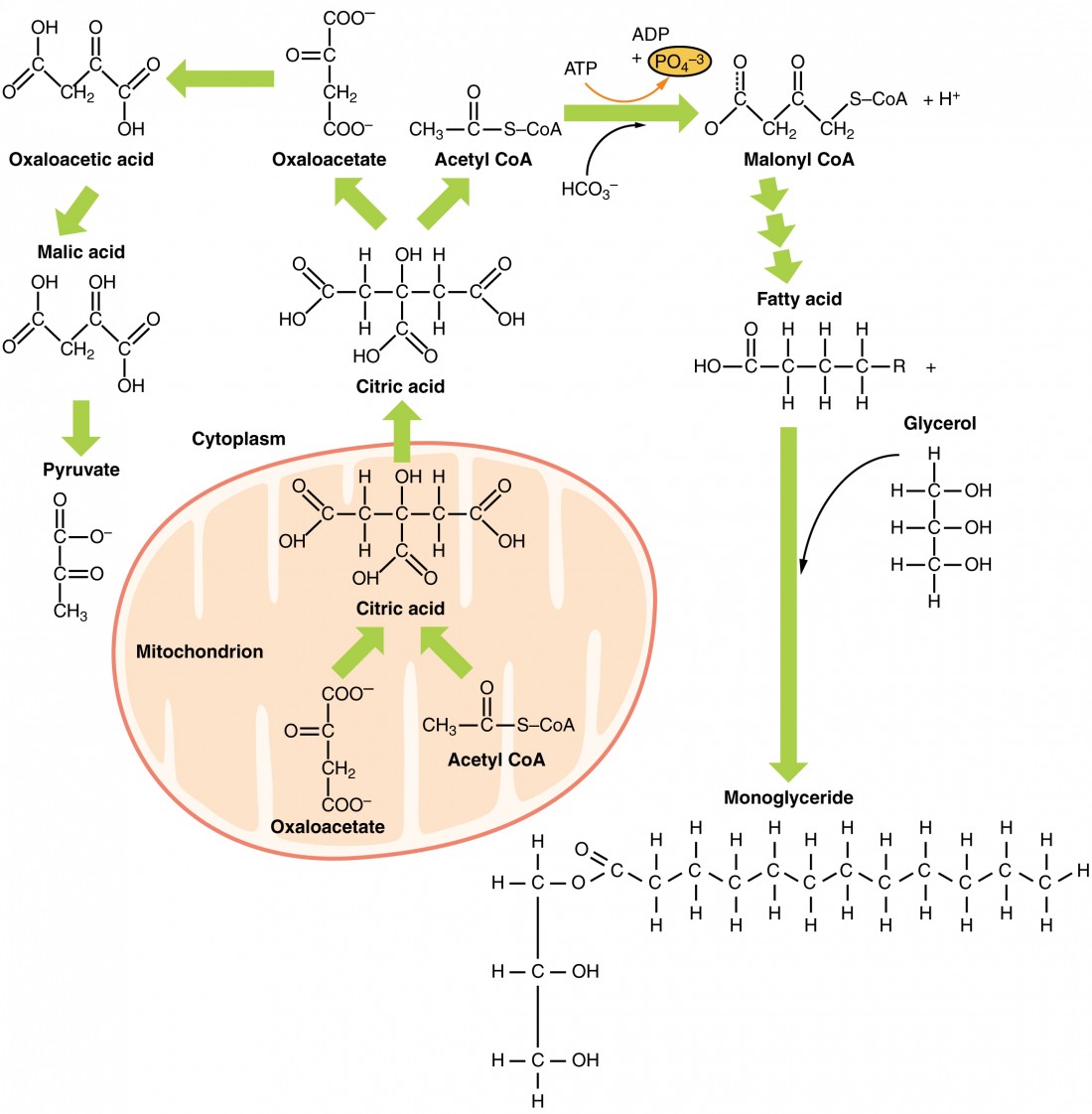
Although lipogenesis occurs in the cytoplasm, the necessary acetyl CoA is created in the mitochondria and cannot be transported across the mitochondrial membrane. To solve this problem, pyruvate is converted into both oxaloacetate and acetyl CoA. Two different enzymes are required for these conversions. Oxaloacetate forms via the action of pyruvate carboxylase, whereas the action of pyruvate dehydrogenase creates acetyl CoA. Oxaloacetate and acetyl CoA combine to form citrate, which can cross the mitochondrial membrane and enter the cytoplasm. In the cytoplasm, citrate is converted back into oxaloacetate and acetyl CoA. Oxaloacetate is converted into malate and then into pyruvate. Pyruvate crosses back across the mitochondrial membrane to wait for the next cycle of lipogenesis. The acetyl CoA is converted into malonyl CoA that is used to synthesize fatty acids. Figure 6 summarizes the pathways of lipid metabolism.
This figure shows the different reactions that take place for lipid metabolism.
Figure 6. Lipids may follow one of several pathways during metabolism. Glycerol and fatty acids follow different pathways.

Summary

Lipids are available to the body from three sources. They can be ingested in the diet, stored in the adipose tissue of the body, or synthesized in the liver. Fats ingested in the diet are digested in the small intestine. The triglycerides are broken down into monoglycerides and free fatty acids, then imported across the intestinal mucosa. Once across, the triglycerides are resynthesized and transported to the liver or adipose tissue. 
Fatty acids are oxidized through fatty acid or β-oxidation into two-carbon acetyl CoA molecules, which can then enter the Krebs cycle to generate ATP. If excess acetyl CoA is created and overloads the capacity of the Krebs cycle, the acetyl CoA can be used to synthesize ketone bodies. When glucose is limited, ketone bodies can be oxidized and used for fuel. Excess acetyl CoA generated from excess glucose or carbohydrate ingestion can be used for fatty acid synthesis or lipogenesis. Acetyl CoA is used to create lipids, triglycerides, steroid hormones, cholesterol, and bile salts. Lipolysis is the breakdown of triglycerides into glycerol and fatty acids, making them easier for the body to process.

Saturday, October 20, 2018

Motivation, Will Power and Discipline


Motivation

Motivation has become a popular word nowadays. There are motivational coaches and speakers, and motivational books and articles. What is it actually, and why do you need it?
Motivation is a driving force. In order to accomplish anything, you need a driving force, otherwise nothing will happen. A wish is not strong enough to make you take action. A wish is a weak desire. Only a strong desire can drive forward, to act and accomplish aims and goals.
In order to get motivated, you need to know exactly what it is that you want, to possess a strong desire, and to be willing to do whatever it takes to accomplish your goal.
More than often there is lack of motivation or only a short-lived one. How many times have you started enthusiastically a weight loss program, began a bodybuilding or aerobics training program or started to learn a foreign language, only to stop after a short while? Few people possess enough willpower and self-discipline to go through to the end with what they begin.

It’s easier to show motivation in connection with a subject that is dear to you. If you desire something, but you don't feel motivated enough to act, this means that the desire is not important enough. To be motivated to take action and do something in respect to your desire, you need to possess a really strong desire.
Motivation has much to do with the emotions and the imagination, which means that if you want to increase it, you have to work on your feelings and imagination.
Tips to increase your motivation:
1. Think, meditate and find out whether you really want to achieve your desire, and whether it is worth the effort and time.
2. Make your goal very clear. Writing it down will help.
3. Think often about your goal or desire.
4. Visualize your goal as already accomplished, and close your mind to contrary thoughts.
5. Read books or articles about the subject of your goal.
6. Read about people who have achieved success.
7. Think often about the benefits you will gain by achieving your goal.
8. Visualize, and think about how you would feel after achieving your goal.
9. Repeat positive affirmations such as: "I have the desire and inner strength to achieve my goal". Repeat this affirmation often, with faith and strong feelings.
10. Start with doing something small concerning your goal. Success in small matters leads to greater success.
Motivation is the powerful engine that moves you towards success and accomplishments in every area.
Everyone is motivated and excited about losing weight in January.  The promise of a new year ignites motivation and will power, but it can quickly wane after the challenges of life wear us down. The time to intensify motivation is NOW. You must intensify your will power by tapping into your personal motivators.

The Most Important Motivator

Although you may think that your family is your top motivator, actually it’s YOU! Because if you’re not healthy, then, your family will not be healthy. This is the time to be selfish – remember to take care of Number 1 – You!
Develop and maintain a positive attitude with life as well as an open mind to new ideas about health and nutrition. Focus on what you need to do to be healthy, not the reasons why you cannot be healthy. What you focus on will be what defines you and your journey – so focus on the positive, not the negative. Establish relationships with positive people full of hope, and healthy people who have either beat their diabetes or are controlling it with nutrition and exercise.
Look for what you love about your family members and friends instead of what’s wrong with them. Acknowledge these positive perspectives to each of them individually and together. Keep in mind that discord with family members and friends can create stress. Also, starting out on this new journey may threaten some relationships that are founded on co-dependency. Some of their resistance to your changes may be due to their concern that they may lose your friendship. Assure them that that is not the case. But also assure them that you will not allow them to deter you from your new journey. Try to find a partner or friend who will work with you and support you on your journey.

Will Power and Discipline

Will power is the ability to overcome laziness and procrastination. It is the ability to control or reject unnecessary or harmful impulses. It is the ability to arrive to a decision and follow it with perseverance until its successful accomplishment. It is the inner power that overcomes the desire to indulge in unnecessary and useless habits, and the inner strength that overcomes inner emotional and mental resistance for taking action – to lose weight. It is one of the corner stones of success, both spiritual and material.
Discipline is the companion of will power. It endows with the stamina to persevere in whatever one does. It bestows the ability to withstand hardships and difficulties, whether physical, emotional or mental. It grants the ability to reject immediate satisfaction, in order to gain something better, but which requires empowerment, empowerment, effort, execution and evolution – The 4 Es of getting things done.

You must feel empowered to go on a journey that will improve your health. Everyone associates effort with doing physical things, but there is a mental side to effort as well. Execution is the “implementation of effort” – it is necessary to make the actual changes to lose the weight. And, evolution is the change or evolvement of you as a person – because you will be a different person after this journey to wellness.
Everyone has inner, unconscious, or partly conscious impulses, making them say or do things they later regret saying or doing. On many occasions people do not think before they talk or act. By developing these two powers, one becomes conscious of the inner, subconscious impulses, and gains the ability to reject them when they are not for his/her own good.
Will power and discipline help us to choose our behavior and reactions, instead of being ruled by them. Their possession won't make life dull or boring. On the contrary, you will feel more powerful, in charge of yourself and your surroundings, happy and satisfied.
How many times have you felt too weak, lazy or shy to do something you wanted to do? You can gain inner strength, initiative and the ability to make decisions and follow them. It is not difficult to develop these two powers. If you are earnest and are willing to become stronger, you will certainly succeed.
There is a misconception in the public mind regarding will power. It is erroneously thought to be something strenuous and difficult, and that one has to exert and tense the body and mind when expressing it. It is a completely wrong concept. This is one of the reasons why people avoid using it, though they are conscious of its benefits. They acknowledge the fact that the employment of will power in their life and affairs will greatly help them, and that they need to strengthen it, yet they do nothing about it.
Will power gets stronger by holding back and not allowing the expression of unimportant, unnecessary and unhealthy thoughts, feelings, actions and reactions. If this saved energy is not allowed expression, it is stored inside you like a battery, and it becomes available at the time of need. By practicing appropriate exercises, you develop your powers the same way, as a person who trains his/her muscles in order to strengthen them.

Developing Will Power and Discipline
An effective method for developing and improving these abilities is to perform certain actions or activities, which you would rather avoid doing due to laziness, procrastination, weakness, shyness, etc. By doing something that you do not like doing or are too lazy to do, you overcome your subconscious resistance, train your mind to obey you, strengthen your inner powers and gain inner strength. Muscles get stronger by resisting the power of the barbells. Inner strength is attained by overcoming inner resistance.
Remember, strengthening one of these abilities, automatically strengthens the other one. Here are a few exercises:
1) You are sitting in a bus or train and an old man or woman, or a pregnant lady walks in. Stand up and give up your seat even if you prefer to stay seated. Do this not just because it is polite, but because you are doing something that you are reluctant to do. In this way you are overcoming the resistance of your body, mind and feelings.
2) There are dishes in the sink that need washing, and you postpone washing them for later. Get up and wash them now. Do not let your laziness overcome you. When you know that in this way you are developing your will power, and if you are convinced of the importance of will power in your life, it will be easier for you to do whatever you have to do.
3) You come home tired from work and sit in front of the TV because you feel too lazy and tired to go and wash. Do not obey the desire to just sit, but go and have a shower
4) You may know your body needs some physical exercise, but instead you keep on sitting doing nothing or watching a movie. Get up and walk, run or do some other physical exercise.
5) Do you like your coffee with sugar? Then for a whole week decide to drink it without sugar. You like to drink three cups of coffee each day? For a week drink only two.
Do you hate Brussel sprouts or broccoli? Then, for a whole week, eat Brussel sprouts for breakfast and dinner. Then, for the next week, eat broccoli for breakfast.
6) Sometimes, when you want to say something that is not important, decide not to say it.
7) Don't read some unimportant gossip in the newspaper or magazine, even if you want to.
8) You have a desire to eat something not too healthy. For the sake of the exercise refuse the desire.
9) If you find yourself thinking unimportant, unnecessary, negative thoughts, try to develop lack of interest in them, by thinking about their futility.
10) Overcome your laziness. Convince yourself of the importance of what is to be done. Convince your mind that you gain inner strength when you act and do things, in spite of laziness, reluctance or senseless inner resistance.
Never say that you cannot follow the above exercises, because you certainly can. Be persistent no matter what. Motivate yourself by thinking about of the importance of performing the exercises, and the inner power and strength you will gain.
Please Note: Trying to attempt too many exercises when you are still a beginner, might end in disappointment. It is better to start training yourself through easier exercises at first, and gradually increase the number and difficulty of the exercises. Practice will improve and increase your power, giving you a lot of satisfaction.
Most of these exercises can be practiced anywhere, anytime. You do not have to devote special times for them. Believe me, they are very effective. Practicing them enables you to be strong and exercise will power and self-discipline in everything you do. This power would become available whenever needed.
If you practice weight lifting, running or doing aerobics, you strengthen your body. When you need to move something heavy, you have the strength for it. By studying French each day, you will be able to talk French when you travel to France. The same thing happens with will power and self-discipline. By strengthening them, they become available whenever they are needed.
It is important to remember not to choose exercises that might affect adversely your body or health. Deny and give up what is not necessary, futile or is harmful, but not what is vital for your well being. Always use your reason and common sense, so that you do no damage to yourself.

If for the sake of an exercise, you stop doing something that you usually do, and overcome the inner resistance concerning it, you may resume doing it, if it is not harmful. For example, if you love drinking orange juice, and for the sake of an exercise you switch to drinking apple juice, after doing so for some time and after it makes no great difference to you, you may go back to drinking orange juice, if you still like it. The point here is to develop inner strength, not making life difficult for you or continue doing things you don't like to do.
Advantages of Possessing Strong Will Power and Self Discipline
You need both of them in order to rule your thoughts and to be the boss of your mind. The stronger they are, the more control you have over your thoughts, and consequently your powers of concentration get stronger.
When you are the master of your mind you enjoy inner peace and happiness. Outer events do not sway you, and circumstances have no power over your peace of mind. This might sound too unreal for you, but experience will prove to you that all the above is true.
These abilities are essential for self growth, spiritual growth and meditation. They give you control over your daily life, help you improve your habits and behavior, and they are the keys to every success.
Practice the exercises presented here earnestly and with persistence, and you will go really far.

Discipline

Once you’re motivated and understand will power, you must have the discipline to continue with your weight loss goals.
What is discipline? Discipline is the training of your mind to control, perceived harmful, urges, and to continue to control these urges until a satisfactory resolution has been sought.
Discipline occurs in every part of your life right now, you might not have recognized it but it does. When you get out of bed in the morning to go to work, that is self discipline; when you brush your teeth every morning, that is self discipline; when you have a shower or a bath every morning, that is self discipline. Although you might not have recognized it as such we use this skill every day in our lives.

Imagine if you harnessed this power to change different aspects of your life. There are many areas of your life it could benefit; in fact it could benefit every area of your life. If you want to give up smoking, no matter what programs are available to do so, it ultimately comes down to self discipline. If you want to lose weight, yes it’s great that there are groups of people who are doing the same as they can be a good motivator but again it comes down to self discipline.
Who’s in control of your mind?
With television, computers, e-mail, radio, mobile phones, video, iPods, newspapers, magazines, etc there has never been an easier way to reach our minds through advertising. A lot of us don’t realize that we are all being manipulated in some way to do things that may be harmful to us. I am not talking conspiracy or anything like that, it’s been a natural progression. Advertisers have become a lot smarter and appealed to our psyche rather than our rational minds, there are some great adverts out there which slip into our minds and build up and eventually get us to act to buy something or do something.
For example our children are bombarded with advertisements for fast foods (MacDonald’s anyone?) or a new toy (because they have to have the latest thing). Why is so much spent on advertising for children when it’s the adults who are buying? Because it’s the children who ultimately apply the pressure for us to go to MacDonald’s or to buy the latest toy.
The practice of self discipline
While it’s hard to control your thoughts and actions as a child it should be easier for an adult, you would think! However this is not necessarily the case. If you’ve not been taught self discipline as a child how are you expected to self discipline yourself as an adult?
The truth is self discipline comes automatically for some us as our responsibilities become greater. For example when we get a job, we have to get up at a set time, we have to work a set number of hours, we have to conform to the companies rules and procedures, that’s all self discipline. Usually the things we learn to practice self discipline in are the things we are rewarded with e.g. our job, going to the gym, saving money, making love.
Depending on the person some of these rewards will be bigger and have more meaning than some of the others.
What good would self discipline have in your life?
What if you could practice self discipline in everything you do? How would your life change? Would it change? Think of these questions for a moment. Some of the areas in your life you could change might be:
      The amount of time spent with the kids
      Your health
      Your weight
      Your fitness
      The tidiness of your house or office
      Fixing all the broken things in your house (fix that shelf once and for all)
      The amount of time spent watching TV
      Watching what you eat
      Fasting for one day per week
      Having a cold shower every morning
      Get your finances sorted out
      Write those letters you’ve been meaning to write
      Make the phone calls you’ve been meaning to make
      Organize your life
      Getting up early to be thankful of all the things you have
The list could go on and on ... the key is to identity the things that you want to do.